
The visible AI story is jobs and disruption. The hidden story is what artificial intelligence is doing to the way your brain thinks — every time you skip the hard part without noticing.

Key Takeaways
- AI is replacing the starting point of thinking, not just assisting it.
- Cognitive offloading is increasing as users rely on AI before thinking.
- The “almost stage” is essential for reasoning skills.
- Heavy AI use can weaken memory and independent thinking.
- Using AI after thinking protects critical thinking ability.
Table of Contents
- Where Thinking Begins
- Cognitive Offloading
- The Almost Stage
- What Research Shows
- How the Brain Adapts
- The Dependency Loop
- Not Everyone Equal
- What You Can Do
- What’s Still Yours
- FAQ
There’s a version of this conversation that sounds dramatic. Machines are getting smarter. Jobs disappearing. Entire industries shifting overnight. That’s the visible part of the AI story. But the part that has been bothering me lately is much smaller and much closer. It happens in moments that don’t look important at all. “Can AI replacing thinking”?
You’re trying to figure something out—a message, a decision, or an idea that isn’t fully clear yet. You start thinking, and before it gets uncomfortable, you stop. Not because you’ve reached an answer. Because you don’t need to. You can just ask the AI.
And within seconds, something comes back — structured, confident, complete. It sounds right. It feels finished. So you move on. At first, it feels like progress. Like you just saved time. But what I’ve started noticing is this: I didn’t just save time. I skipped the part where thinking actually happens.
To understand this shift more deeply, read our guide on how AI is changing human thinking habits, where we break down what’s really happening behind the scenes.
This Isn’t About AI Tools — It’s About Where Thinking Now Begins
We’ve always used tools to make thinking easier.We wrote things down so we don’t have to remember everything. We use calculators instead of doing all the math ourselves.We use search engines instead of memorizing every fact.
None of that reduced our ability to think deeply — because those tools came after engagement.
You still had to understand the question first. Attempt the process. Recognize whether the result made sense. Those three steps built the mental infrastructure that made you capable of using the tool well in the first place.
What’s different now is the starting point. A growing number of people aren’t using AI after thinking. They’re using it instead of starting. And that shift — from support to starting point — is where things begin to quietly change in ways that are hard to see but easy to feel, months later, when you need to think alone.
Cognitive Offloading: The Scientific Name for What’s Happening
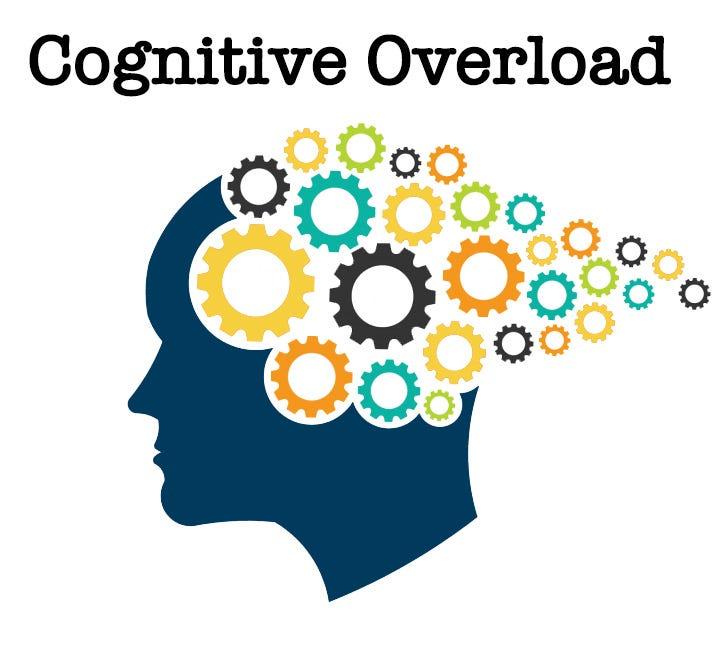
Psychologists call this cognitive offloading — relying on external systems to handle mental work. It’s not new. Humans have always done it. But the scale and the timing have changed dramatically with AI.
- Around 4 out of 5 students in the U.S. now use AI tools for schoolwork, according to Stanford’s 2026 AI Index
- In multiple surveys, over 50% report using AI as a first step, not a last resort
- Only 6% of teachers say their school has clear policies on AI use
That combination matters. When something becomes both effortless and unstructured, behavior shifts quickly — not through instruction, but through habit. And habits formed in the absence of friction are almost invisible until you try to do the thing without the crutch.
“The issue isn’t that AI makes things easier. It’s that it makes starting optional — and optional discomfort is the first thing people stop choosing.”
The “Almost Stage”—The Part of Thinking Nobody Talks About
There’s a stage in thinking that rarely gets discussed but matters more than anything else in the learning process. It’s the moment where your idea is not fully formed yet. Rough. Incomplete. Slightly wrong. You could call it the almost stage.
That’s where connections start forming. Gaps become visible. Your own reasoning gets tested against itself. It’s also the easiest stage to skip—because now, instead of sitting in that productive uncertainty, you can jump straight to something polished.
And if you never spend time in that middle space, you never really learn how to navigate it. You become fast at recognizing answers. You become slower at building them from the ground up. That’s a significant difference when the stakes are high and there’s no AI in the room.
Why the “Almost Stage” Matters for AI Users
The “almost stage” is where memory schemata form—the durable neural structures that allow intuitive reasoning, error-checking, and pattern recognition. Skip it consistently and you don’t lose raw intelligence. You lose the infrastructure that makes intelligence self-correcting—the ability to catch when an AI output is confidently, fluently wrong.
What Early Research on AI and Brain Activity Is Showing
This isn’t just a feeling or a theory. Early signals are appearing across cognitive science research:
- Studies on heavy AI-assisted work have found reduced neural activity in brain regions linked to working memory and analytical reasoning (Frontiers in Psychology, 2025)
- Users showed an increasing tendency to recognize answers rather than independently generate them
- One study found students using AI for writing reported significantly higher confidence—but independent evaluation showed no meaningful improvement in depth or originality
Confidence went up. Capability stayed flat. That mismatch is the dangerous part—because it hides the problem from the person experiencing it. If performance dropped visibly, we would notice and correct. But when confidence rises at the same time, it creates a comfortable illusion of improvement that removes the motivation to do anything differently.
The Brain Adapts to What You Repeat
The neurological principle underneath all of this is simple: the brain strengthens what it uses and lets go of what it doesn’t. If you regularly retrieve information under effort, build arguments from scratch, and sit with uncertainty long enough to reach your own conclusions, those pathways strengthen. If you regularly bypass them, they gradually weaken.
Researchers have started describing this as a form of cognitive atrophy — not the loss of intelligence, but the loss of practice. And practice is what maintains ability. The Flynn Effect—the decades-long global rise in IQ scores that ran from the 1930s through the 1980s—has begun reversing in several advanced countries, including the US, UK, France, and Norway. Cognitive psychologist Barbara Oakley and a team of neuroscientists have connected this partly to the rise of cognitive offloading to digital tools. AI is the most efficient version of this shift we have ever introduced into daily life.
The AI Dependency Loop Nobody Is Designing Around
There’s a pattern forming that is easy to miss precisely because it feels like efficiency:
- You rely on quick AI answers
- You feel less confident doing it independently
- You rely on AI even more as a result
- Your independent reasoning ability gradually weakens
- Your dependency deepens further—feeling justified
A 2026 paper in Frontiers in Education described this as a vicious cycle: over-reliance on AI erodes confidence in your own abilities, which increases AI dependence, which erodes confidence further. The loop feeds itself. And it doesn’t feel like decline. It feels like being productive. That’s what makes it so difficult to interrupt.
Not Everyone Is Experiencing This the Same Way
There’s an important divide worth being honest about. Some people are genuinely becoming more capable with AI. They use it to move faster through work they already understand deeply, to test ideas more efficiently, to challenge their own thinking with different angles. For them, AI is pure leverage.
But for someone who uses AI as a replacement for building understanding in the first place, the effect runs in the opposite direction. It becomes a shortcut around developing the very foundation that makes the tool useful. Both groups can produce similar-looking outputs in the short term. Internally, one is building capability. The other is borrowing it. Over time, that gap widens—and it widens silently, because outputs look identical until a moment arrives when they clearly don’t.
How to Use AI Without Losing Your Critical Thinking Skills
This is not a rejection of AI tools. There is real, documented value here—faster access to information, better assistance when genuinely stuck, new ways to explore and expand ideas. The issue isn’t the existence of these systems. It’s how effortlessly they become the default starting point before your own thinking has had a chance to begin.
Cognitive scientists have a term for the fix: “cognitive complementarity“—using AI to enhance and challenge your internal thinking, not to replace it. In practice, it comes down to a simple change in sequence:
1. Try first—even for 60 seconds
Before opening any AI tool, write your own rough answer, sketch a structure, or state your position. Even one imperfect sentence forces your brain to engage with the actual problem.
2. Stay in the “almost stage.”
Allow yourself to remain with an incomplete, slightly wrong idea. This is not wasted time. This is where the cognitive structures that make you good at this are being built.
3. Use AI as a comparison, not a replacement
When you do consult AI, compare its output to what you thought. Ask where it differs, where it’s better, and where you disagree. This keeps your judgment active.
4. Find one thing to push back on
Identify one point in any AI output to question, challenge, or refine. This single habit maintains the evaluative function that separates users who are thinking with AI from those thinking through it.
If you want practical ways to stay sharp, check out how to stay mentally sharp in the AI age for simple strategies you can apply daily.
The Part That Still Belongs to You
Technology will keep improving. That part is settled. But this part isn’t: whether you stay involved in your own thinking process. Whether you finish your thoughts, question what you’re given, tolerate not knowing for a little longer before reaching for the answer. These are still choices — small ones, repeated daily, that quietly shape the kind of thinker you become.
The real question about AI and thinking isn’t whether things are getting easier. They are. The real question is: what are we becoming in response to that ease?
Because tools don’t just change what we can do. They change what we practice. And what we practice is what we become good at. Some things are difficult because they build something essential. Thinking is one of them.
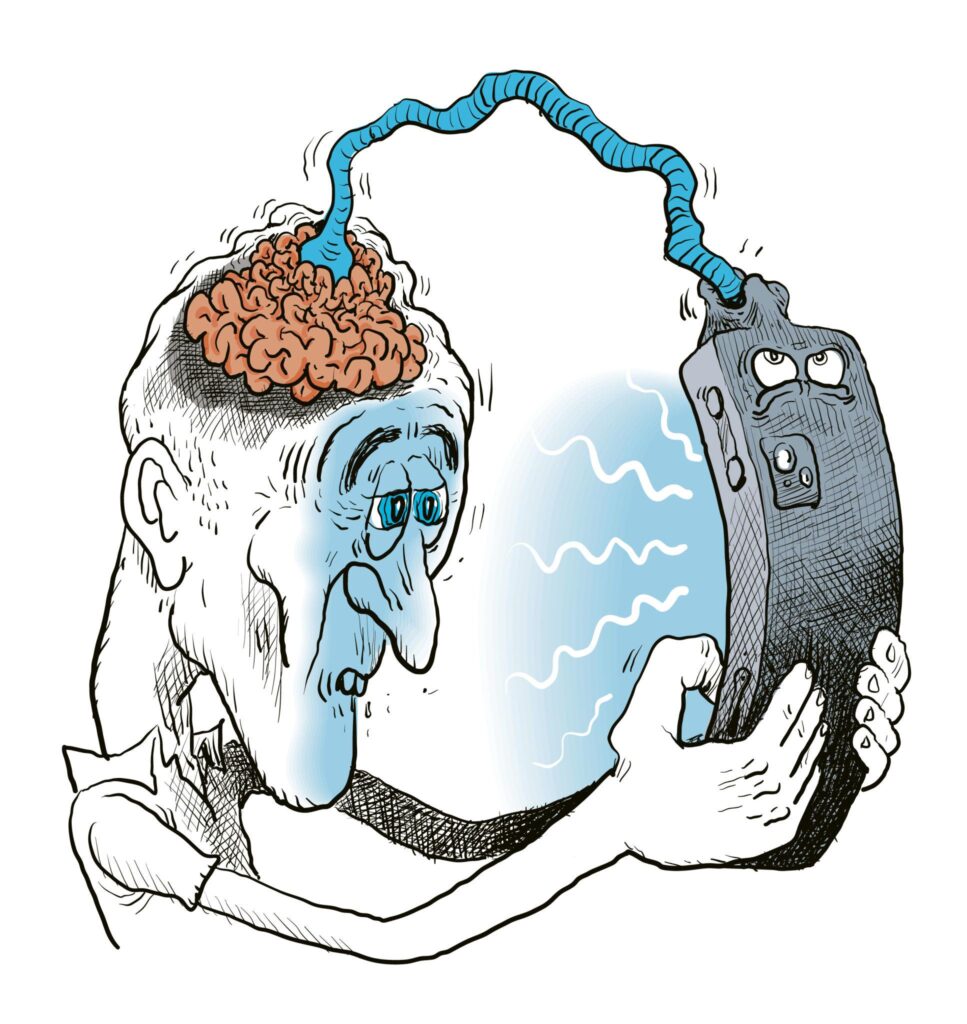
The Quiet Shift We Don’t Notice
If we slowly remove that difficulty from our lives — not through a big decision, but through everyday habits — the change won’t be obvious at first. It won’t feel like loss.
But we will notice it eventually. In moments where there’s no clear answer, no structure to follow, no system to rely on. Those moments still exist. They haven’t disappeared.
They’ve just become easier to avoid.
And that might be the real shift — not that thinking is disappearing, but that we’re choosing to do less of it than we used to. And when small choices are repeated long enough, they stop feeling like choices at all.

Frequently Asked Questions
Research doesn’t show a direct drop in raw intelligence. What studies observe is cognitive atrophy in specific areas — reduced practice of retrieval, reasoning under uncertainty, and building arguments independently. The brain weakens pathways it no longer exercises. Intelligence isn’t disappearing; the habit of applying it without assistance is weakening among heavy AI users.
Cognitive offloading means delegating mental work to external tools. It has always existed — writing, calculators, maps. With AI, it has moved earlier in the thinking process: before engagement rather than after it. When offloading becomes the starting point rather than a support tool, the brain stops building the underlying structures that make deeper reasoning possible.
Cognitive scientists recommend “cognitive complementarity” — using AI to enhance and challenge your thinking, not replace it. Practically: attempt the problem first, form your own rough answer, then consult AI as a comparison point. The sequence matters more than the frequency of use. Trying first keeps your judgment active.
Research suggests cognitive offloading has a stronger developmental impact during formative years when executive functions are still forming. With 80% of US students using AI for schoolwork and only 6% of teachers reporting clear AI policies, the structural conditions for building independent thinking habits are significantly weaker than they should be at this stage.
The “almost stage” is the moment in thinking where your idea is not yet fully formed — rough, incomplete, slightly wrong. It is where connections form, gaps become visible, and your reasoning gets tested against itself. This is where memory schemata are built. Consistently skipping this stage by jumping to AI answers means those deep cognitive structures never fully develop.
Sources & References
- Jose et al. (2025). “Outsourcing cognition: the psychological costs of AI-era convenience.” Frontiers in Psychology 16:1645237
- Klein, C.R. (2025). “The extended hollowed mind: why foundational knowledge is indispensable in the age of AI.” Frontiers in Artificial Intelligence
- Gluck, S. & Katz, L. (2026). “AI in education: new tools to navigate the AI reality.” Frontiers in Education 11:1765510
- Stanford HAI — 2026 AI Index Report (April 2026) · Oakley, B. et al. “The Memory Paradox” (2025)
- Springer Nature Research Communities: “How AI is rewiring the human brain” (March 2026)
- Tian, J. & Zhang, R. (2026). “Outsourcing thinking to AI?” Humanities & Social Sciences Communications

Hey, I’m Vishal Srivastava — the person behind USAConcern.com. I started this site because I genuinely believe there are conversations happening in America that deserve more honest, human coverage. I write about health, mental wellness, lifestyle, and the cultural shifts shaping everyday American life, as I come from a strong background in artificial intelligence and engineering, combined with certified knowledge in mental wellness and fitness. My goal is to bridge the gap between technology and human well-being. I believe true success comes from a balance of a sharp mind, a healthy body, and smart use of technology. Through my work, I aim to provide practical solutions that improve both performance and lifestyle. Thanks for reading—your journey to a better mind, body, and life starts here.