
It’s 7 a.m. on a Tuesday. Instead of rushing out the door with a coffee in hand and anxiety in their chest, a growing number of young Americans are choosing to sit by the window, watch the light change, and — deliberately — do nothing urgent. Welcome to the soft life.
Where the Hustle Culture Didn’t Work
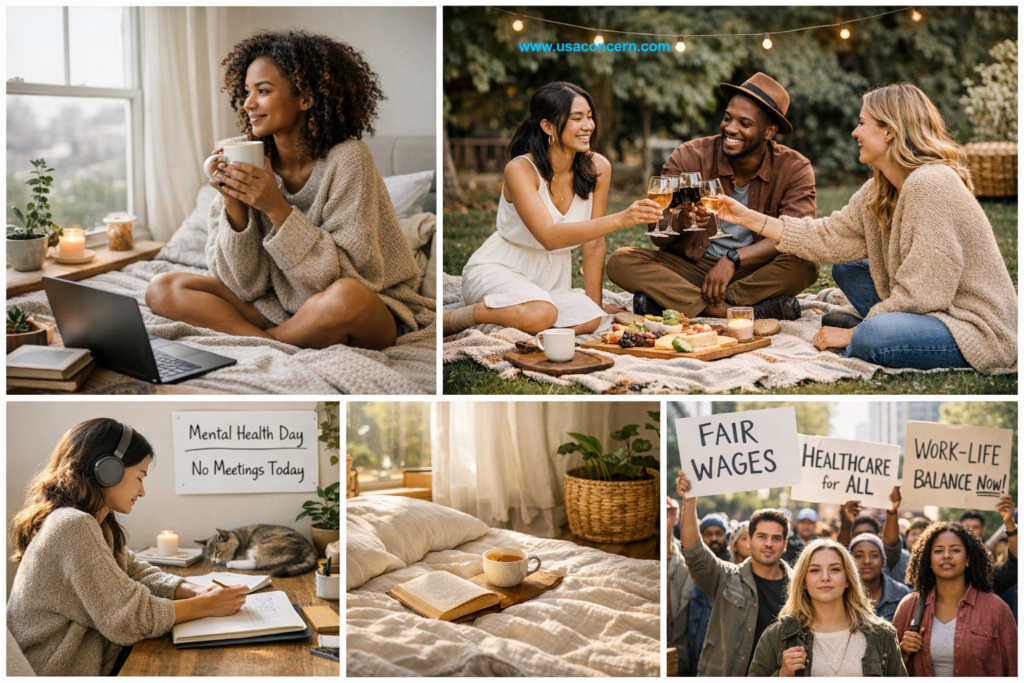
If you’ve spent any time on TikTok or Instagram in the past two years, you’ve probably seen it: slow mornings, houseplants on windowsills, pastel mugs, journaling, candlelight dinners cooked at home. At first glance, it looks like an aesthetic. But dig a little deeper, and the “soft life” movement turns out to be something more significant — a genuine cultural pushback against decades of hustle culture that left many young people burned out, broke, and wondering what they were working so hard for.
This isn’t laziness. It’s a recalibration. And it’s reshaping how a generation thinks about work, money, relationships, and what a good life actually looks like.
Where did the hustle culture promise break down?.
To understand the soft life, you have to understand what came before it. For much of the 2000s and 2010s, hustle culture was the dominant religion of ambition. “Rise and grind.” “Sleep when you’re dead.” Gary Vee on repeat. The message was clear: if you weren’t working every waking hour, you weren’t serious about success.
And for a while, many young people believed it. They took on unpaid internships, worked multiple side gigs, skipped vacations, and sacrificed sleep — all in pursuit of a version of success that kept moving further away. The promised rewards — stable careers, home ownership, financial security — turned out to be harder to reach than any previous generation had experienced.
77% of U.S. workers report experiencing burnout at their current job
$37,500 average student loan debt per borrower in the U.S. (2024)
38%of millennials say they’ll never be able to afford a home
Sources: Gallup State of the Global Workplace Report 2023; Federal Student Aid; Bankrate Housing Survey 2024

When the system doesn’t reward your sacrifice, you start questioning the sacrifice itself. That’s precisely what happened. And the soft life emerged as the answer to a simple, honest question: If hustle culture isn’t getting me where I want to go, why am I still doing it?
So what exactly is the “soft life”?,
The term itself originally comes from Nigerian pop culture, where it described a life of luxury and ease. In its American evolution, it has taken on a broader meaning — less about wealth, more about intentionality. It’s about designing your daily life around comfort, mental health, and genuine joy rather than productivity metrics and social status.
In practice, it looks different for different people. For some, it means leaving a high-paying but soul-crushing job for one with better hours and less stress. For others, it’s setting firm boundaries around evenings and weekends — no work emails after 6 p.m., full stop. For many, it’s smaller than that: choosing sleep over a late-night Netflix scroll, or buying fewer things but better ones.
“I used to feel guilty every time I rested. Like rest had to be ‘earned.’ Now I think that was the most toxic thing I ever believed.” — Comment from a 27-year-old nurse on a soft life Reddit thread, 2025
Is it just a pretty Instagram trend?
That’s a fair question — and honestly, part of it is. Search “soft life” on Instagram and you’ll find a carefully curated world of linen bedsheets, matcha lattes, and perfectly lit apartments. There’s a consumer side to this movement that’s worth being honest about. Brands have been quick to package “softness” as a product: weighted blankets, mood-lighting subscriptions, wellness apps, $90 candles.
Critics — and there are plenty — call this “softwashing.” They argue that what started as a genuine rejection of overwork has been commodified into just another thing to buy your way into. And they’re not entirely wrong.
But here’s the thing: most cultural movements eventually get commercialized. That doesn’t automatically hollow them out. The question is whether the underlying values survive the marketing machine — and for many people, they do.
The real soft life isn’t about buying things. It’s about stopping things. Stopping the 60-hour weeks. Stopping the guilt around rest. Stopping the habit of saying yes to everything and everyone except yourself. You can live a genuinely softer life without spending a single dollar on aesthetics.
The inequality problem nobody wants to talk about
Here’s where the conversation has to get uncomfortable. The soft life, as it’s often portrayed online, skews toward people who already have economic safety nets. If you’re a gig worker with no paid time off, or a single parent working two jobs, “slow mornings” aren’t a lifestyle choice — they’re a fantasy.
This tension is real and important. The ability to opt out of hustle culture requires a baseline of financial stability that millions of Americans simply don’t have. Talking about soft living without acknowledging structural inequality — unequal wages, lack of affordable healthcare, housing insecurity — risks turning a meaningful movement into a privilege flex.
The most honest advocates for soft living acknowledge this directly. They argue that the real goal isn’t just personal lifestyle change — it’s policy change. Universal paid leave. Livable wages. Affordable healthcare. These are the structural foundations that would make soft living accessible, not just aspirational.
What the research actually says about rest and performance
Here’s something hustle culture never wanted you to know: the science has always been on the side of rest. Decades of research in sleep science, cognitive psychology, and organizational behavior consistently show that overwork leads to diminishing returns — and that well-rested, lower-stress workers are more productive, more creative, and less likely to make costly mistakes.
A landmark study by John Pencavel at Stanford found that worker output falls sharply above 50 hours per week — and that working 70 hours a week produces the same output as working 55. Another study by the World Health Organization found that working 55+ hours per week increases the risk of stroke by 35% and heart disease by 17%.
The soft life, in other words, isn’t just kinder. In many cases, it’s smarter.
Want to try soft living? Start with these five small shifts
- Set one firm daily boundary — no work after a specific time — and keep it for two weeks
- Choose one commitment this month to decline, even if you technically could say yes
- Replace one scrolling session with something that genuinely restores you: a walk, a meal cooked slowly, a real phone call
- Audit your spending: are you buying things for status or for genuine enjoyment?
- Follow at least one social media account that shows soft living realistically — messy, imperfect, and honest
The bigger picture: what this movement might change
Individual lifestyle choices rarely transform societies on their own. But they can signal shifts in values that, over time, shape culture, politics, and institutions. The growing popularity of soft living — combined with trends like quiet quitting, the four-day work week movement, and increasing demand for remote and flexible work — suggests that something real is changing in how Americans think about the relationship between work and life.
Companies are beginning to take note. A 2024 Gallup report found that employee engagement and well-being are now among the top factors in talent retention — above salary for many knowledge workers. Firms that offer genuine flexibility and respect for personal time are finding it easier to recruit and keep good people. The market, in its imperfect way, is starting to respond.
Whether the soft life becomes a lasting cultural shift or a generational phase remains to be seen. But it’s asking questions that deserve serious answers: What is work for? What does a good life require? And who gets to decide?
The bottom line
The “soft life” movement is more than an Instagram aesthetic. At its core, it’s a genuine reckoning with the broken promises of hustle culture — and an attempt by a generation to build a life that actually feels livable. It has real tensions: between aspiration and privilege, between individual choice and structural constraint, between genuine values and clever marketing. But those tensions are worth sitting with, because they point to questions that matter deeply for all of us. Sometimes, choosing gentleness isn’t giving up. It’s growing up
Sources & further reading
Gallup State of the Global Workplace Report, 2023 — gallup.com
Pencavel, J. (2014). “The Productivity of Working Hours.” Stanford University / IZA Discussion Paper No. 8129
WHO/ILO Joint Analysis: “Overwork kills” — who.int, 2021
Bankrate Annual Housing Survey, 2024 — bankrate.com
Federal Student Aid Data Summary, U.S. Department of Education, 2024
Thank you for visiting usaconcern.com and taking the time to read our content. Your visit truly matters to us. Stay alert and stay informed, because an informed voice can help shape a better future.
Feel free to leave a comment below with your thoughts!!


“Hey, I’m Vishal Srivastava — the person behind USAConcern.com. I started this site because I genuinely believe there are conversations happening in America that deserve more honest, human coverage. I write about health, mental wellness, lifestyle, and the cultural shifts shaping everyday American life. No corporate agenda. No fluff. Just real stories, real research, and my honest take on what it all means. Thanks for reading — it means more than you know.”