
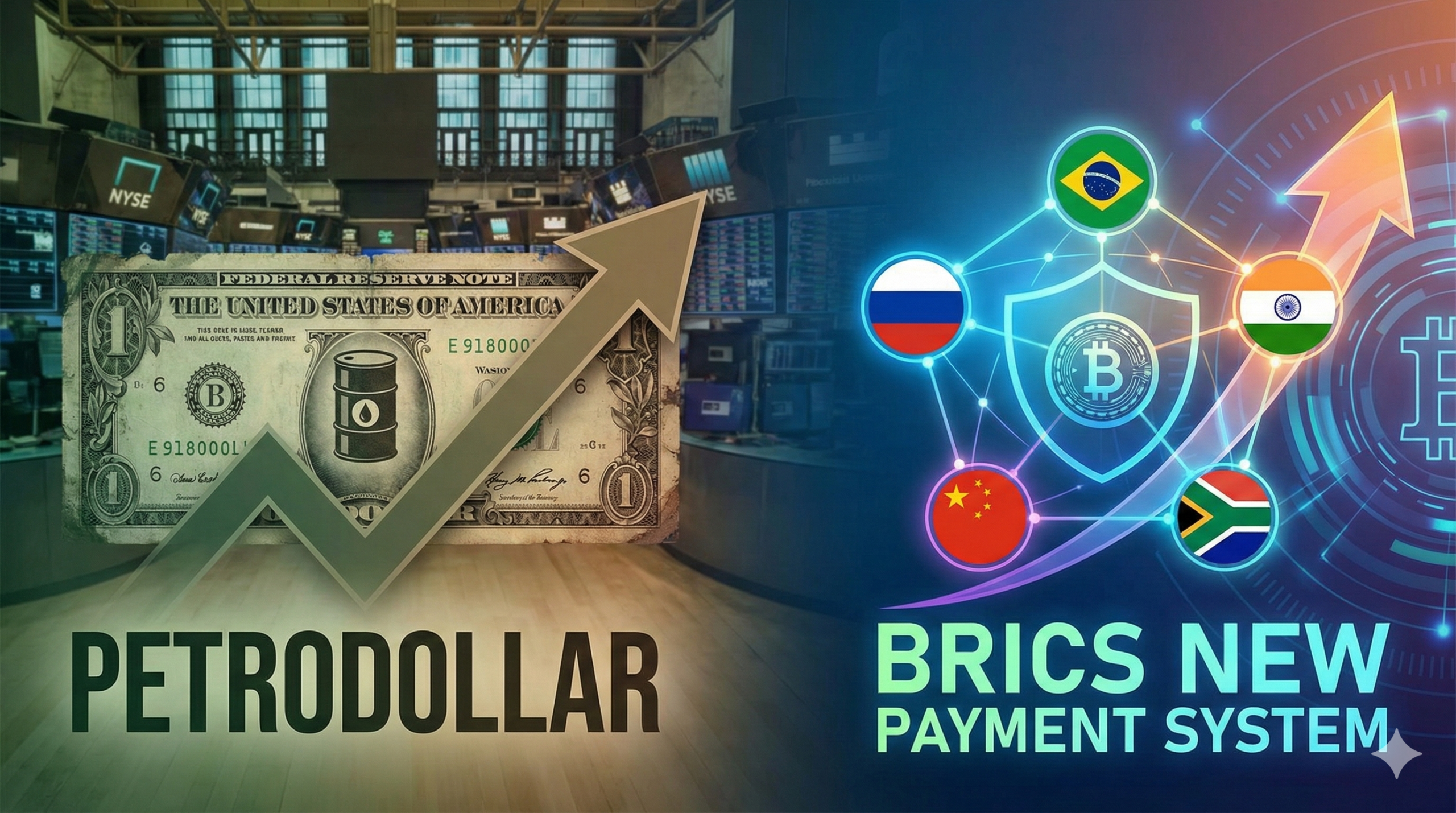
The Rise and Fall of the Petrodollar: A 50-Year Economic Cycle
“The 50-year Petrodollar monopoly has ended. Discover how the new BRICS payment system is reshaping the global economy and what it means for the US dollar in 2026.”
“Is the US dollar collapsing? We analyze the rise of the BRICS payment system, the end of the Saudi deal, and the future of global energy trade without the Petrodollar.”
1.The Origin: The Deal of 1974
1974In the wake of the 1973 oil crisis and the US abandoning the Gold Standard, the value of the dollar was shaky. To stabilize it, the Nixon administration struck a deal with Saudi Arabia in 1974.
•The Terms: Saudi Arabia would price all its oil sales in U.S. dollars and invest their surplus revenue (“petrodollars”) into U.S. Treasury bonds.
•The Exchange: The U.S. guaranteed military protection and hardware to the Kingdom.
1•The Result: By 1975, all OPEC nations followed suit. If a country wanted energy, it had to acquire U.S. dollars first. This created a permanent, artificial demand for the dollar.
2.How the “recycling” Mechanism Worked
The brilliance of the system lay in “Petrodollar Recycling.”
- Purchase: A country (e.g., Japan) buys oil from Saudi Arabia.
- Payment: Japan pays Saudi Arabia in USD.
- Recycling: Saudi Arabia, having more dollars than it needs for immediate spending, invests that excess cash back into US Government Debt (Treasury bonds) to earn interest.
- Benefit: This flow of money allowed the US government to borrow cheaply and spend freely, financing everything from the military to social programs, effectively subsidized by global energy trade.
3.The Turning Point (2024-2026)
The structural integrity of this system began to crack noticeably around June 2024, marking the end of the formal 50-year commitment by Saudi Arabia to the US. While the “death of the dollar” was exaggerated by headlines, the monopoly effectively ended.
1.The shift has been driven by three main factors:
Weaponized Finance: U.S. sanctions froze dollar assets, making many countries see the dollar as risky.
Petro-Yuan: China pushed oil suppliers to accept yuan; by 2025, Gulf oil trade with China bypassed the dollar.
Petro-Rupee: India began paying for UAE and Russian oil in rupees, recycling them into its markets, weakening dollar power.
4. The New Reality: From Monopoly to Options
We are not witnessing the disappearance of the dollar, but rather a return to currency competition.
•The Dollar’s Role: It remains a major payment currency but is no longer the exclusive gatekeeper of energy.
•Global Inflation: As demand for dollars softens, the US loses the “exorbitant privilege” of printing money without consequence. This has contributed to the stubborn inflation and higher interest rates seen in the US economy throughout 2025 and 2026.
•Gold’s Renaissance: Central banks, no longer needing to hold as many dollars for oil, have aggressively pivoted to gold, driving prices to historic highs.
Conclusion
“For 50 years, the Petrodollar powered U.S. financial dominance. Its decline won’t collapse the economy, but it forces America to compete globally for capital. The era of easy money is ending.”