A generation raised on chaos, comparison, and a global pandemic decided enough was enough. They walked into therapy, talked about their feelings out loud, and quietly started a revolution the rest of America is still catching up to

I remember the first time someone my age told me they were seeing a therapist.
It was whispered. Like a confession. Like they were admitting to something embarrassing. And honestly? The way the room got quiet, you’d think they had said something scandalous.
That was not long ago. And yet somehow, in what feels like the blink of an eye, an entire generation has completely flipped that script.
Today, young Americans in their teens and twenties talk about therapy the way older generations talked about going to the gym. It’s just something you do. Something you invest in. Something you’re not ashamed of.
Gen Z — the generation born between 1997 and 2012 — didn’t just make therapy more popular. They made it normal. And in doing so, they’ve started one of the most quietly important cultural conversations in modern America.
I want to dig into that. Not with press-release language or clinical distance — but honestly. Because this story is more interesting, more complicated, and more hopeful than most people realize.
“They didn’t wait to hit rock bottom. They decided rock bottom wasn’t the only reason to ask for help.”
Let’s Start With What This Generation Actually Lived Through
I think a lot of people dismiss Gen Z’s mental health struggles without stopping to consider what their lives actually looked like from the inside.
Picture this: You’re born in the early 2000s. The world you grow up in is post-9/11, permanently anxious, and permanently online. By the time you’re a teenager, you have a phone in your hand giving you real-time access to every horrible thing happening in the world—school shootings, climate reports, political chaos — alongside a perfectly curated feed of other people’s highlight reels that make your own life feel hopelessly inadequate.
Then, just as you’re finishing high school or starting college—figuring out who you are, what you want, and where you’re going—a pandemic shuts the entire world down. Your graduation? Canceled. Your first job? Gone. Your social life? A screen.
And this wasn’t just a bad few months. For many Gen Zers, this was their entire early adulthood. The years that are supposed to be formative, exciting, and full of firsts are spent isolated, anxious, and grieving a normal life they never quite got to have.
So when I see the statistic that nearly half of Gen Z — 46% — has received a formal mental health diagnosis, my first reaction isn’t surprise. It’s: of course. What else would you expect? What surprises me is what they did next.

| 46% of Gen Z Americans have received a formal mental health diagnosis — more than any previous generation at the same age. |
| 💡 Why This Matters Previous generations faced hard times too—wars, recessions, and loss. But they largely suffered in silence. Gen Z was the first to say, “This isn’t something we should just push through alone.” |
They Didn’t Just Struggle — They Did Something About It
This is the part of the story I think gets lost in the noise.
Yes, Gen Z has higher rates of anxiety and depression than older generations. But—and this is crucial—they also have the highest rates of actually seeking help.
Over 42% of Gen Zers are currently in therapy. That number has jumped 22% since 2022 alone. Compare that to just 26% of Gen X and 22% of Baby Boomers, and you start to see just how dramatically the needle has moved in one generation.
But it doesn’t stop at therapy. Around 77% of Gen Zers engage in some kind of structured self-improvement around mental health—journaling, mindfulness apps, podcasts, and books. They’ve built an entire personal wellness ecosystem around themselves, and they move through it like it’s the most natural thing in the world.
Because to them, it is.
These aren’t kids who discovered therapy because something catastrophically bad happened. Many of them started going proactively—because they understood early that mental health is something you maintain, not just something you fix when it breaks.
That’s a mindset shift. And it’s a big one.
42% of Gen Zers are currently attending therapy — a 22% jump since 2022, outpacing every previous generation.
“Proactive care. That’s the real revolution. Not waiting until you’re drowning to learn how to swim.”
They Gave America a New Language for feelings.
Okay, I want to give Gen Z credit for something that doesn’t get talked about enough.
They changed the words we use.
Think about how many phrases are now part of everyday American conversation that weren’t five years ago. “Setting boundaries.” “Trauma response.” “Emotional labor.” “Burnout.” “People pleasing.” “Triggered.” “Anxiety spiral.” These aren’t clinical terms whispered in therapy offices anymore. They’re in text messages. Job interviews. Family conversations. Workplace emails.
And here’s why that matters more than you might think: language shapes experience. When you have a word for what you’re feeling, you can talk about it. When you can talk about it, you can ask for help. When enough people ask for help, the stigma starts to crack. And when the stigma cracks — real change becomes possible.
Gen Z didn’t just normalize therapy. They normalized the entire conversation around emotional experience. They made it okay to say “I’m not okay” without it feeling like a dramatic admission of failure.
That’s a gift, honestly. Even if a lot of older people still find the vocabulary a little much.
The Self-Help World They Built
Beyond talking the talk, Gen Z built something practical. Mental health apps. Therapy TikTok. Instagram pages with millions of followers dedicated to anxiety, healing, and emotional regulation. Reddit communities where strangers support each other through panic attacks at 2am.
It’s not perfect. Some of it is oversimplified. Some of it is outright wrong. But the infrastructure they created — a whole digital ecosystem of mental wellness tools — has genuinely made support more accessible for millions of young people who might otherwise have had nowhere to turn.
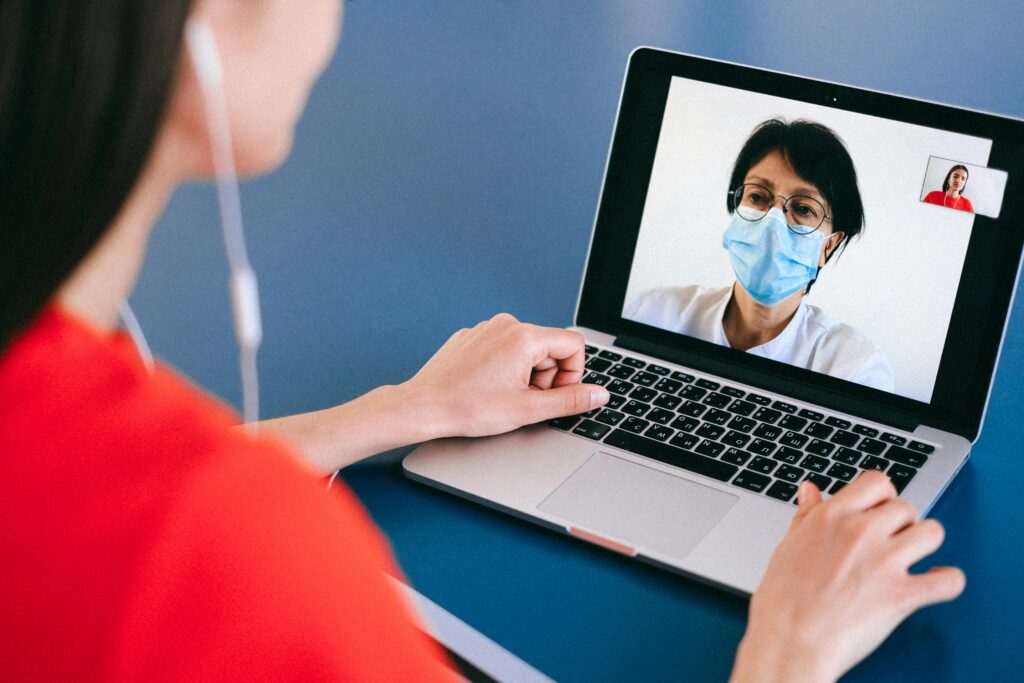
📱 Did You Know? 70% of Gen Z prefers virtual therapy over in-person sessions. Telehealth didn’t just make therapy more convenient—it made it possible for people who’d never have walked into a therapist’s office.
The Technology Paradox: Wound and Bandage at the Same Time

Here’s where the story gets complicated in an interesting way.
Social media — the thing most associated with Gen Z — is also one of the biggest contributors to their mental health struggles. That’s not an opinion, it’s well-documented. Heavy use of Instagram and TikTok correlates with higher rates of anxiety, depression, and loneliness. The comparison culture is real. The algorithm designed to keep you scrolling is real. The way a highlight reel makes your own ordinary life feel like a failure is real.
Gen Z lives in that environment more than anyone. They know its effects from the inside.
And yet — here’s the fascinating part — they’ve also turned those same platforms into some of the most effective mental health discovery tools we’ve ever seen.
A therapist explains a cognitive distortion in a 90-second TikTok, and it gets 4 million views. Someone posts about their experience with anxiety, and thousands of people comment, “I thought it was just me.” A creator documents their therapy journey, and suddenly people who’ve been avoiding help for years finally book an appointment.
The same screen that makes you feel worse at midnight can be the thing that connects you to help at noon. That tension doesn’t resolve neatly — and Gen Z sits right in the middle of it, more aware of it than any generation before them.
| 70% of Gen Zers prefer virtual therapy — making mental health care more accessible than any point in American history. |
The Honest Truth: The Work Isn’t Done
I want to be careful here not to make this sound like a victory lap. Because it isn’t one — not yet.
Despite all the progress, 4 in 10 Gen Zers still feel stigma around mental health in schools and workplaces. Only about half know where to actually find help when they need it. And the access gap is real, wide, and deeply unfair.
Therapy is expensive. In many parts of America, there aren’t enough therapists to go around. Rural communities, low-income families, and communities of color face compounding barriers — cultural stigma, geographic distance, cost, historical mistrust of healthcare systems. Talking openly about mental health is progress. But progress in the conversation doesn’t automatically translate into progress in access.
Gen Z knows this too. Many of them are the most vocal advocates for systemic change — pushing for mental health resources in schools, fighting for insurance coverage of therapy, calling out workplaces that offer a “wellness program” that’s really just a PDF of breathing exercises.
They’re not satisfied with the conversation. They want the infrastructure to match it.
“Changing the conversation is the first step. Building the systems to back it up — that’s the harder, longer work.”
What This Is Actually Doing to the Rest of America
Something I find genuinely moving about this whole story is that Gen Z’s influence isn’t staying neatly contained to their generation. It’s spreading outward. Into workplaces. Into schools. Into family dinner tables. Into the quiet internal reckonings of people twice their age.
Employers who once treated mental health as a personal problem — something you handled on your own time and never mentioned at work — are now competing to offer therapy benefits, mental health days, and flexible schedules. Not out of the goodness of their hearts, but because younger workers demanded it and started leaving companies that didn’t provide it.
Schools are being pushed — slowly, imperfectly, but genuinely — to treat student wellbeing as part of their core mission rather than a nice-to-have extra.
And in homes across America, something quiet is happening. Parents who never went to therapy are watching their kids go and wondering. Older siblings are getting curious. People who spent decades dismissing mental health as something other people needed are starting to ask questions about their own. The numbers reflect it: 54% of Gen Zers now report mostly good mental health days — a 21% improvement from their post-COVID low point. Whatever they’re doing, it’s working
54% of Gen Zers report mostly good mental health days — up 21% since the post-pandemic low. The openness is paying off
A Few Things Gen Z Is Getting Right That We Should All Pay Attention To
I’ll be direct. It’s easy — especially for older generations — to roll your eyes a little at therapy culture. At the vocabulary. At the boundary-setting and the “I need to protect my energy” talk.
I get it. Some of it can feel performative. Some of it probably is.
But look past the surface, and there’s real wisdom here:
- They treat mental health as ongoing maintenance, not emergency repair. You don’t wait until your teeth fall out to see a dentist. Why wait until you break down to see a therapist?
- They ask for help before they hit rock bottom. That’s not weakness. That’s intelligence.
- They refuse to let institutions off the hook. Schools, employers, and systems are expected to take wellbeing seriously — and Gen Z will hold them accountable when they don’t.
- They share their stories, which makes other people feel less alone. That’s one of the most genuinely powerful things a person can do.
- They understand that emotional health and physical health are the same conversation. You can’t take care of one while completely ignoring the other.
None of these are radical ideas. They’re common sense ideas that somehow took us this long to widely accept.
So Where Does This Leave Us?
Gen Z didn’t choose the world they were born into. They didn’t choose the anxiety, the social media pressure, the pandemic, or the generation-defining chaos that shaped their early lives.
But they chose how to respond. And their response has been — when you really look at it clearly — remarkably healthy. More emotionally literate than any generation before them. More willing to ask for help. More insistent that the systems around them take human wellbeing seriously.
Did they get everything right? No. Is their approach sometimes oversimplified or overly online? Sure. Are there real structural problems — access, cost, inequality — that a cultural shift alone can’t fix? Absolutely.
But here’s what I keep coming back to: a generation that faced an objectively difficult set of circumstances chose openness over silence. Connection over shame. Help over suffering alone.
That’s not a small thing. That’s actually kind of extraordinary.
And if you have a Gen Z person in your life — a child, a sibling, a younger coworker — maybe instead of finding their vocabulary exhausting or their boundaries confusing, it’s worth pausing to consider what they figured out that the rest of us are still working on.
They might be onto something.
| 📋 WHAT YOU NEED TO KNOW |
| ✔ 46% of Gen Zers have received a formal mental health diagnosis — more than any prior generation |
| ✔ 42% are currently in therapy, up 22% since 2022 — outpacing all older generations |
| ✔ 77% actively practice some form of mental self-care beyond therapy |
| ✔ 70% prefer virtual therapy — making access easier and less stigmatized |
| ✔ 54% now report mostly good mental health days, up 21% since the post-COVID low |
| ✔ 4 in 10 still feel stigma in schools and workplaces — the work isn’t finished |
| ✔ Their cultural shift is already reshaping workplaces, schools, and family conversations |
Thank you for visiting usaconcern.com and taking the time to read our content. Your visit truly matters to us. Stay alert and stay informed, because an informed voice can help shape a better future.
Feel free to leave a comment below with your thoughts!!