
By Vishal Srivastava | usaconcern.com | April 8, 2026

My cousin Marcus lived in Chicago for eleven years.
Good job. Decent apartment. A neighborhood he knew street by street. On Saturdays he coached youth basketball. Every Sunday morning, the same diner, the same booth, the same waitress who remembered his order. Chicago wasn’t perfect, but it was home.
Last September, he loaded a U-Haul and drove to Charlotte, North Carolina.
Nobody laid him off. No dramatic incident pushed him out. The math simply stopped working — rent had climbed $600 in three years, property taxes crept up, and groceries felt like a second mortgage. When he finally sat down and ran the real numbers, one truth became impossible to ignore: he was working a full-time job primarily to fund the city he lived in.
So he left.
Here’s what nobody says loudly enough: Marcus is not alone. Millions of middle-class Americans are making the same quiet calculation — and the people in power are watching it happen without a single serious response.
If you look closely, this shift isn’t happening in isolation. It’s deeply connected to broader economic changes, including hiring slowdowns and income uncertainty across the country. We recently explored this in detail in our analysis of the U.S. job market trends for 2026, where the pressure on middle-class workers becomes even more clear.
Why Americans Are Leaving Big Cities in 2026
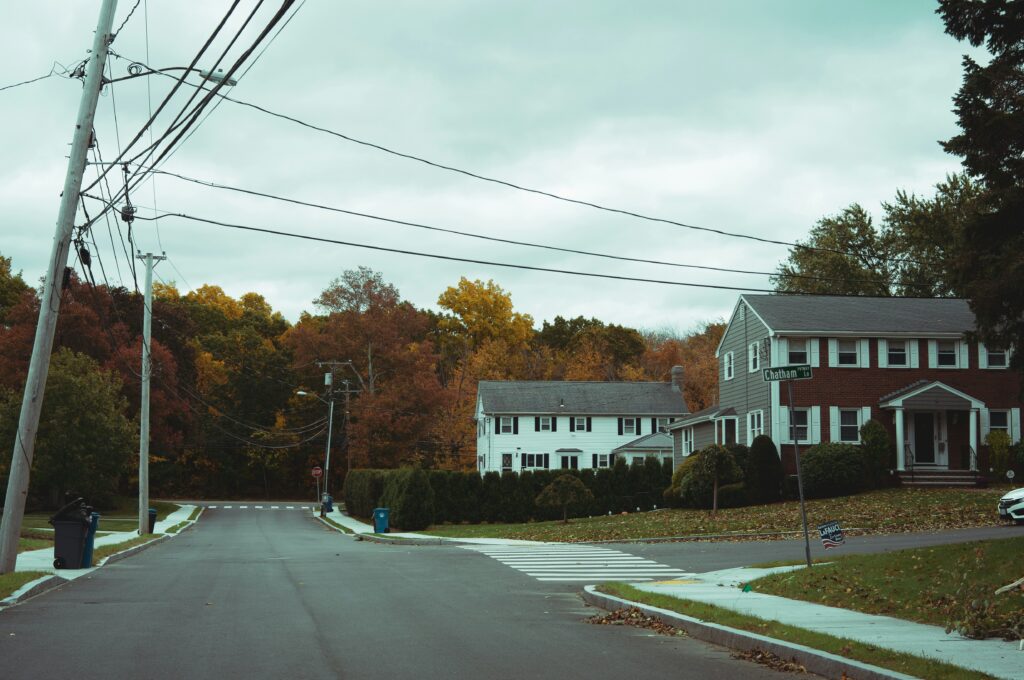
Let’s start with what the data actually shows, because this story is more complicated than “people are fleeing big cities.”
According to a report by Newsweek (2025), New York lost over 119,000 residents,the metros losing the most domestic residents are familiar names: New York lost 119,198 people, Los Angeles lost 99,979, Miami lost 67,418, and Chicago lost 42,844. Newsweek: These aren’t small numbers. Picture stadiums full of teachers, nurses, accountants, and tradespeople—quietly deciding that the city that once promised them a future no longer delivers.
According to a recent report by Newsweek, major U.S. cities saw significant population declines in 2025, reflecting a growing shift away from expensive urban centers.
And the destinations? Not where you’d expect.
The biggest winners in 2025 weren’t solely major metros — they were mid-sized and smaller markets. Leading the nation was the Myrtle Beach–Conway–North Myrtle Beach, South Carolina metro area, which saw a net gain of 190 new residents for every 10,000 people. HireAHelper
Myrtle Beach. Not New York. Not Los Angeles. Not even Austin. A mid-sized coastal town in South Carolina now ranks among the most sought-after destinations in America. South Carolina led the nation in net migration per capita, gaining 79.7 residents per 10,000 people, while Charlotte attracted an impressive 53,486 new residents from outside its metro area. PGM
This isn’t a trend. It’s a restructuring. And it’s moving faster than most people realize.
Real Examples Across the U.S.
This shift isn’t just a theory — it’s already happening in some of America’s biggest cities.
In New York City, many middle-income families are struggling to justify rent that keeps climbing while salaries stay relatively flat. What used to feel like the center of opportunity now feels financially suffocating for many.
On the West Coast, San Francisco tells a similar story. Once a dream destination for professionals, it’s now seeing steady outflow as residents look for more affordable alternatives in places like Sacramento or even out-of-state cities.
Meanwhile, in Los Angeles, the cost of living — especially housing, fuel, and daily expenses — is pushing families toward suburban areas where they can stretch their income further without sacrificing basic comfort.
But what’s interesting is where people are going.
States like Texas (Austin, Dallas) and Florida (Tampa, Orlando) are seeing an influx of middle-class movers. These places offer a balance — lower housing costs, growing job markets, and a lifestyle that feels more sustainable in the long run.
Survival, Not Lifestyle — Let’s Be Honest
Every few months, some outlet runs a piece about Americans “chasing the good life” in smaller cities—sun porches, lower stress, better barbecue. Mainstream media frames this as a choice. A preference. A lifestyle upgrade.
That framing is dishonest.
Data from the National Association of Home Builders shows that nearly 75% of U.S. households cannot afford a median-priced new home, highlighting the scale of the affordability crisis.
When you cannot afford to buy a home in the city where you grew up, leaving isn’t a lifestyle decision — it’s financial elimination.
The affordability crisis isn’t just about housing — it reflects a deeper economic imbalance affecting wages, job stability, and long-term financial security. If you want a clearer picture of how these forces are shaping everyday life, our recent coverage on economic shifts in America breaks it down in a way most headlines don’t.
The Lock-In Trap Making Everything Worse
Mortgage rates dropped from 7% to 6.2% in 2025. While rates have steadily fallen, the cost to buy a home remains high, leading many potential buyers to hold off on big purchases. North American Van Lines
Adding to that pressure is what economists call the “lock-in effect.” Current homeowners are choosing to stay put because they don’t want to lose their low mortgage rate. North American Van Lines People who can’t afford to move into major cities are trapped outside them. People who can’t afford to move out are trapped inside. The middle class faces pressure from both directions—and the exits are narrow.
Remote Work Opened a Door — But Only for Some
The shift to remote work didn’t create the affordability crisis. Decades of policy failure, corporate consolidation, and financialized housing did that. Remote work did, however, give millions of middle-class workers something they’d never had before: a real choice about where to live.
According to Stanford economist Nick Bloom, 25 percent of all paid U.S. workdays are now performed from home — a figure that has stabilized since 2023 and shows no signs of returning to pre-pandemic levels. A record 32.6 percent of Redfin users in 2025 searched for homes in a metro area different from where they currently lived, up from approximately 26 percent before the pandemic. Newsweek
Who Actually Gets to Leave
For the first time in a generation, a software engineer in San Francisco could genuinely ask, “Do I need to be here?” Increasingly, the answer is no.
But here’s the part that rarely gets enough attention. Research from the Federal Reserve Bank of Philadelphia found that remote work disproportionately enables migration among high-income, highly educated workers — the demographic with the most location flexibility. Newsweek

The people who can leave are leaving. Service workers, hourly employees, teachers, nurses — the people without remote jobs — are staying behind. Cities grow more expensive, less resourced, and increasingly hollowed out at the middle. That’s not a migration trend. It’s a class-sorting mechanism disguised as a lifestyle shift.
The Midwest Moment Nobody Saw Coming
While everyone watched Texas and the Carolinas absorb middle-class families from coastal cities, something quieter was happening in the Midwest.
Minneapolis and Indianapolis both flipped from net domestic outflow to net inflow. Minnesota appeared on United Van Lines’ top 10 inbound list for the first time. Zillow’s hottest housing markets of 2025 were dominated by affordable Midwest cities—Rockford, Illinois; Toledo, Ohio; Dearborn, Michigan; South Bend, Indiana; and Carmel, Indiana. Newsweek
Why Toledo Beats San Francisco Right Now
These are not glamorous destinations. Nobody makes movies set in Toledo. What they offer, though, has become almost radical in 2026: affordability. Real jobs. Actual communities. Homes you can buy on a middle-class salary without a second income and a miracle.
Americans are willing to trade status cities for carefully chosen corners that just fit. The next generation of hot destinations will be defined less by state borders and more by places that genuinely feel like home. Movebuddha
That sentence lands differently when you consider what it reveals. The aspiration used to be making it in New York and making it in L.A. Today the aspiration is to find a place that doesn’t punish you for existing.
What Gets Left Behind — And Who Pays
Every migration conversation focuses on the people who leave. Rarely do we talk honestly about what happens to the places — and people — left behind.
The Ripple Effect on Communities
When middle-class families exit a city, their tax dollars go with them. Their children leave the school system. Their spending disappears from local businesses. The neighborhood changes — sometimes quickly, sometimes slowly, but always permanently.
Washington D.C. saw its fortunes “take a nosedive” in 2025 due to federal job losses that ricocheted throughout the local economy. Move Buddha Behind that statistic are barbers, restaurant owners, dry cleaners, and childcare providers whose customer base vanished. Cities don’t just lose residents — they lose entire ecosystems. Rebuilding them takes decades.
What fills the gap? In some cities, wealthy newcomers drive prices up further. In others, vacancy and decay move in. Neither outcome helps the working-class residents who have no remote job to rely on and no other place to go.
The Question Every American Voter Should Be Asking Right Now
Here is what I keep waiting for and never seeing from anyone in elected office.
One politician. Anywhere. With the honesty to stand up and ask: Why are millions of middle-class Americans concluding that the cities we built are no longer worth living in?
Not “how do we attract remote workers to our downtown core?” Not “how do we market our city to young professionals?” The real question — the uncomfortable one sitting underneath all of this data — is this:
What kind of country are we building, and who exactly is it being built for?
Stability Has Become the New American Dream
In 2025, new movers chose stability over novelty, affordability before extravagance, and careful planning instead of quick relocations. PGM
Read that again slowly. The defining aspiration for American movers in 2025 was stability — not ambition, not adventure, not opportunity. Just stability. That’s what middle-class Americans are hunting for now, like it’s a rare resource. Like it’s something you have to leave home to find.
Every city council, every state legislature, every federal policymaker should find that terrifying. It should trigger emergency sessions and serious policy debates about housing, wages, and what we owe working Americans.
Instead, we get press releases.
Where Are Middle-Class Americans Actually Moving?
The destinations may surprise you.
According to a report by HireAHelper, the biggest winners in 2025 weren’t solely major metros — they were mid-sized and smaller markets. Leading the nation was the Myrtle Beach–Conway–North Myrtle Beach, South Carolina metro area, which saw a net gain of 190 new residents for every 10,000 people.
South Carolina led the nation in net migration per capita, gaining 79.7 residents per 10,000 people, while Charlotte attracted 53,486 new residents from outside its metro area. PGM
Myrtle Beach. Charlotte. Boise. Toledo. These are the cities absorbing America’s displaced middle class — not because they’re glamorous, but because they’re survivable.
The Cities Where Middle-Class Life Still Makes Sense in 2026
Based on the latest migration data, these metros consistently offer middle-class families the best combination of affordability, job access, and quality of life right now: Charlotte, NC — Myrtle Beach, SC — Indianapolis, IN — Columbus, OH — Boise, ID — Knoxville, TN — Fort Collins, CO — Toledo, OH.
None of them are New York. None of them are Los Angeles. Every single one of them is a place where a middle-class income can still buy a middle-class life.
What to Expect in 2026 and Beyond
If current trends continue, we’ll likely see:
- More growth in mid-sized cities and suburbs
- Increased pressure on urban housing markets to adjust
- Employers adapting to a more distributed workforce
- A shift in how infrastructure and communities are planned
This is not just migration — it’s a structural change in how Americans live and work.
What This Means for You
If you’re sitting in a major city right now, running the same numbers Marcus ran—here’s my honest take.
The decision to stay or leave is deeply personal. Job, family, roots, risk tolerance — none of that is simple. There’s no universal right answer.
Don’t Let Anyone Call It Giving Up

Don’t let anyone tell you that wanting affordability means abandoning ambition. Don’t accept the framing that leaving an expensive city is a personal failure. The system is not optimizing for you — and waiting for it to do so is its own kind of trap.
Marcus called me last month. He bought a three-bedroom house in Charlotte, with a yard, in a neighborhood where kids still play outside. His mortgage runs $400 less than his old rent.
He said something I haven’t stopped thinking about since.
“I didn’t leave Chicago. Chicago left me.”
Behind every migration report, every U-Haul headed south, and every family that quietly disappears from a city block—that’s the real story. Until the people in power are willing to hear it, truly hear it, the exodus will continue.
And the cities that could have been great — for everyone — will keep bleeding out, one moving truck at a time.
Have you left your city—or are you thinking about it? Share your story in the comments below. For more honest coverage of what’s really happening in American life, explore our stories at usaconcern.com.
Thank you for visiting usaconcern.com and taking the time to read our content. Your visit truly matters to us. Stay alert and stay informed, because an informed voice can help shape a better future.


“Hey, I’m Vishal Srivastava — the person behind USAConcern.com. I started this site because I genuinely believe there are conversations happening in America that deserve more honest, human coverage. I write about health, mental wellness, lifestyle, and the cultural shifts shaping everyday American life. No corporate agenda. No fluff. Just real stories, real research, and my honest take on what it all means. Thanks for reading — it means more than you know.”