
Gas is $3.93. Mortgage rates just hit a 6-month high. Your tax refund is getting eaten at the pump before it reaches your bank account. 28 days in—here’s what this war is actually costing ordinary American families and why nobody in a position of power is being straight with you about it.
I want to start with a number that I haven’t been able to get out of my head since I started looking into this.
$300 million. Every single day. That is how much more Americans are paying at the pump right now than they were 28 days ago, before the United States and Israel launched Operation Epic Fury on February 28th. Not in a week. Not in a month. Every 24 hours. Three hundred million dollars, coming out of the pockets of ordinary American families who were already stretched, already calculating, already doing that thing where you look at what’s coming in and what’s going out and try to find the room, and it keeps getting smaller.
I’ve been writing about the financial pressure on American households for a while now on this site—the cost of living that doesn’t match the income, the debt that keeps compounding, and the gap between what the official numbers say and what real people’s lives actually feel like. And I want to be honest: I didn’t fully understand, until I sat down to write this, how fast a war can collapse whatever breathing room people had managed to carve out.
So let me tell you what I found. Not the foreign policy version. The kitchen-table version.
This is what day 28 actually looks like for the people back home.
On February 28th, gas was $2.98 a gallon. That was the national average — the number you could count on when you were planning your week, deciding how far to drive, figuring out your commute costs.
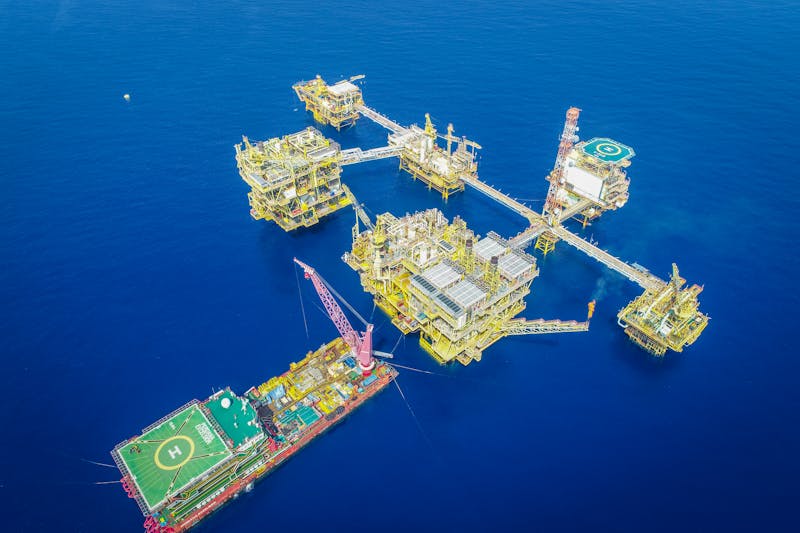
Today it’s $3.93. That 32% surge in just three weeks was triggered by rising oil prices—the direct result of Iran closing the Strait of Hormuz the day after the first US-Israel strikes began. LendingTree and the Strait of Hormuz is not some obscure shipping lanes. It’s a 21-mile-wide channel in the Persian Gulf that, prior to the war, about 130 ships passed through every month, accounting for close to one-fifth of the world’s crude oil and natural gas supplies. FinMasters
One fifth. Gone. Almost overnight. And the people paying for that are not the people who made the decision.
Here’s the thing about the oil market that I didn’t fully understand before I started researching this, and I think it’s important to say clearly: the US is the world’s largest oil producer—and it does not matter. Because oil is priced on a global market, and when a fifth of the world’s supply gets cut off, everyone pays more. Get Out of Debt Guy You don’t get credit for being American. You don’t get a discount because of domestic production. You pay the global price. Every single time you fill up.
And then there’s this—the part that bothered me most when I found it. Despite the easily foreseeable impact of hostilities on energy prices, the Trump administration neglected to refill the nation’s Strategic Petroleum Reserve before going to war, which leaves the economy further exposed to exactly this kind of supply shock. Get Out of Debt Guy The safety net that was supposed to exist for moments precisely like this one—they went in without it fully.
Trump’s response when asked about gas prices? “Short-term oil prices, which will drop rapidly when the destruction of the Iran nuclear threat is over, are a very small price to pay for USA and world safety and peace.” Congress.gov And separately: “If they rise, they rise.”
I’m not going to editorialize heavily here. I’ll just say it is a different experience to say “if they rise, they rise” from a position that is not affected by whether gas is $3 or $4. And that gap — between the people making the decisions and the people at the pump — is the part of this story that I don’t think gets enough honest attention.
Gas is the opening shock. What comes next is slower and in some ways worse.
For ordinary American families, the impact of the war in Iran will not be a single price spike. It will be a rolling series of shocks that hit their wallets at every turn.
Here’s how it actually works, and I want to be specific because the specifics matter.
Jet fuel has surged roughly 85% since the war started. Airlines are already feeling it. WifiTalents: If you have spring break travel coming, summer plans booked, or anything in the air, search for tickets now and compare what you see to what you booked. The number is different.
Diesel is now near $5 a gallon, up more than $1.30 from a month ago. Diesel is a key factor in the cost of consumer goods—it powers the trucks that move food from farms to grocery stores, the equipment that grows it, and the trains that carry it across the country. Careerminds: Every cent diesel goes up, food follows. Not immediately. In waves, over weeks, the way price shocks always travel through a supply chain
And then there’s fertilizer, which most people never think about until it shows up in the bread aisle. One third of the global supply of fertilizer travels through the Strait of Hormuz. The countries most affected—Iran, Qatar, Saudi Arabia, and the UAE—are among the world’s top producers. Spring planting season in the US has already started. Farmers are looking at fertilizer costs that have no recent precedent. Those costs don’t stay on the farm. They land on your grocery bill months from now, in ways that are hard to trace back to a single decision made on a February night.
Grocery prices were already up 3.9% over the last year before this started. Iran’s blockade is now throttling the global supply of fertilizer, which could create fresh pressure on food prices come harvest season. Upwork

So when you look at the grocery store right now, you’re seeing the first wave. The diesel shock. The second wave — the fertilizer and supply chain wave — is still building.
The tax refund that the gas pump is quietly eating.

This is the part that I think deserves its own moment, because it barely got covered and it is genuinely concrete.
This tax season, millions of Americans were expecting bigger refunds. That was real—the refunds were real, the numbers were real, and for a lot of people, that refund was going to mean something. A car repair. A bill that had been building. A moment of breathing room that had been a long time coming.
Oxford Economics estimated that if gas prices averaged $3.60 a gallon in 2026, consumer spending on fuel could “almost exactly offset” the boost from those refunds. Student Loan Planner Gas is already above $3.60 and climbing toward $4.00.
Stanford economists projected that if the Strait of Hormuz remained closed and crude hit $110 per barrel, retail gas could peak at $4.36 per gallon in May — wiping out most or all of the larger tax refunds on average. Goldman Sachs projected the average US household could pay $740 more for gas through year-end.
The money that was supposed to arrive in your bank account this spring — the refund you were maybe counting on — is being quietly consumed at the pump before it can do anything for you. As one economist put it plainly: “The energy shock is going to hit those who have the least cushion, and it doesn’t look like those tax refunds are going to be here to save them.”
That’s the war hitting your household. Not on the news. At the pump. The math doesn’t work out this month the way you thought it would.
The stock market. The mortgage. The things you thought were finally getting better.
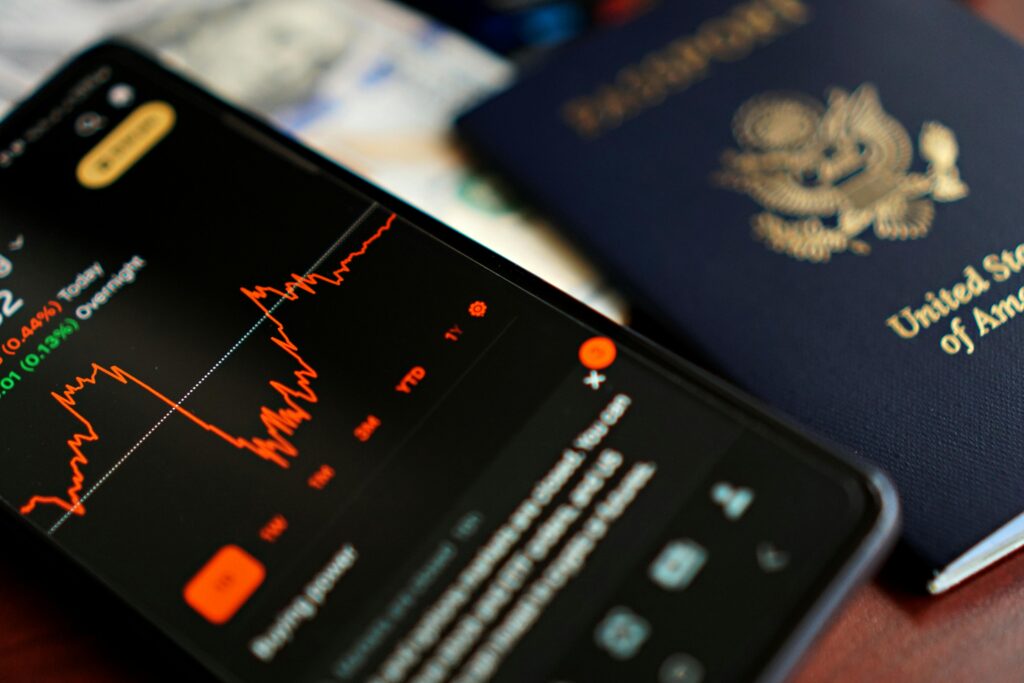
More than half of all American adults own stocks — many through their 401(k)s and retirement accounts. This isn’t a story about wealthy investors watching portfolios. For the S&P 500 and Nasdaq, the last four weeks have been their worst four-week period since April 2025. The Nasdaq is down 6.8% for the year. The S&P 500 is down 4.9%. The Dow is down 5.2%. Fortunately, people are watching their retirement savings shrink every Friday. Quietly. Without much fanfare.
And then there’s housing. This one specifically hurts because of the timing.
After years of sluggish sales, economists expected 2026 to bring lower mortgage rates and more homes for sale. By late February, early signs were positive — mortgage rates slipped below 6% for the first time in more than three years, a key threshold many believed could finally bring buyers and sellers back into the market. The optimism was short-lived.
One day before the strikes on Iran began, the average rate on the 30-year fixed mortgage was 5.99%. It is now hovering around 6.5%. The Workers’ Rights On a $450,000 home with a 20% down payment, a buyer who locked in a rate one month ago would pay about $1,120 less per year than someone securing a rate today. OysterLink
One month. One war. $1,120 a year — gone. For people who were already priced out of the housing market and finally saw a path in, that path just got narrower again.
University of Michigan consumer sentiment data shows that respondents’ expectations for inflation over the next year soared to 3.8% in March from 3.4% in February. Upwork and one senior economist at Bankrate described what’s happening as “hurting the opportunity for Americans to make ends meet, much less afford a potential home purchase.” It’s quite upsetting.”
I don’t usually include that kind of quote. But I thought that one deserved to sit there for a second. It’s quite upsetting. Said by someone whose job it is to analyze these things calmly and professionally. That’s the appropriate level of feeling here.
The people nobody mentions when we talk about the economy.
I want to name some real people before I finish, because the economic data can make this feel like an abstraction and it is not an abstraction.
Zac Grant in Pueblo, Colorado, never let his truck run close to empty. Colorado’s weather was too unpredictable for that. But lately the cost of fuel had been too unpredictable as well. In the weeks since the United States attacked Iran, the price for a gallon in Colorado shot up nearly 35% — a hike the state hadn’t seen in at least a quarter century. That is one person in one state. Multiply it by 330 million.
Alma Newell, a 52-year-old woman in Goleta, California, was asked about rising prices at a gas station. She’s out of work with a shoulder injury. She said the prices have a big impact because she’s not working right now. Congress.gov No drama in that sentence. Just the arithmetic of a life where the numbers are getting harder to make work.
These are the people the economic briefings don’t fully capture. The ones who were already stretched before February 28th. A Pew Research Center poll conducted before the war found 68% of Americans were already very or somewhat concerned about gas prices. Congress.gov The war didn’t arrive in a vacuum. It landed on a country that was already worried, already calculating, already doing the math and coming up short.
What happens when this ends — and the part even the optimistic scenario doesn’t fix quickly.
There is a phenomenon economists call “rockets and feathers.” Gas prices shoot up like a rocket when oil costs rise. But they float back down like a feather when oil falls. We saw it after Russia invaded Ukraine in 2022 and after Hurricanes Katrina and Rita devastated Gulf Coast refining in 2005 — in both cases, prices spiked sharply but took months to fully retreat. F
Even one analyst put it directly: “Even if the Strait of Hormuz were reopened today, it would take months for oil markets to get back to where they were before this price shock. The longer the supply disruptions persist, the longer the price disruptions will last and the more severe they’ll get.” Research.com
Today, Trump announced he is delaying planned attacks on Iran’s energy infrastructure by 10 days, until April 6th. He says talks are going very well. Iran has called the US ceasefire proposal one-sided. The honest answer to when this ends is that nobody knows. And the honest answer to what happens to prices even after it ends is that they won’t come down as fast as they went up. Plan for that.
The International Energy Agency characterized what’s happening in the Gulf as the greatest global energy and food security challenge in history. Bestjobsearchapps Not in recent memory. In history.
And when the Federal Reserve Chair Jerome Powell was asked this week about the war’s economic impact, he said: “The thing I really want to emphasize is that nobody knows. The economic effects could be bigger, they could be smaller, they could be much smaller or much bigger. We just don’t know.”
The most powerful central banker in America. Into a microphone. “We just don’t know.”
That is the honest answer. And it is also, for millions of people trying to figure out their household budget right now, a genuinely terrifying one to hear.
You didn’t start this war. There was no public debate. No vote. No moment where someone asked the people who fill up their own trucks, who track their own grocery bills, who spent years waiting for mortgage rates to drop below 6%, whether they were prepared for this.
Thirteen US service members have been killed so far. At least 10 more were injured this week at Prince Sultan Air Base in Saudi Arabia. Those are real people with families and that cost is real and different from a gas bill and it deserves to be named separately and honestly.
But the financial cost is also real. It is landing on people who were already stretched. People who were already doing that silent calculation every month and coming up shorter than the month before.
The first week of the war alone reportedly cost US taxpayers upward of $11 billion — a figure that doesn’t include the buildup of troops and warships in the region ahead of the initial strikes. WifiTalents The war cost is $200 billion and counting. And gas is $3.93 and climbing, groceries are next, flights are next, and your mortgage rate just went back up after three years of waiting for it to come down.
That’s where we are on day 28. I think it deserves to be said plainly. Without the talking points. Without the framing that makes it easier to absorb. Just the numbers and the people inside them.
How is the war hitting your household right now? Gas, groceries, travel plans, retirement — drop it in the comments below. I read every single one.
| 📋 WHAT YOU NEED TO KNOW |
|---|
| ✔ Gas is $3.93 nationally — up 32% from $2.98 on February 26, two days before strikes began |
| ✔ Americans are paying $300 million more per day at the pump than before the war |
| ✔ The average US household is projected to pay $740 more for gas through year-end |
| ✔ Jet fuel has surged ~85% — flights are next. Diesel near $5 — groceries are next |
| ✔ Your tax refund is being offset at the pump — Stanford economists say gas could wipe out most or all of the larger refunds |
| ✔ Mortgage rates rose from 5.99% to 6.5% in 28 days — erasing years of progress for homebuyers |
| ✔ The S&P 500 is down 4.9% this year; the Nasdaq down 6.8% — four straight weeks of declines |
| ✔ One-third of global fertilizer supply travels through the Strait of Hormuz — food price shocks are still building |
| ✔ The Fed Chair said this week: “Nobody knows” how bad the economic impact gets ✔ The IEA called this the greatest global energy and food security challenge in history✔ Rockets-and-feathers: gas prices rise fast, fall slow — even after a ceasefire, costs won’t drop overnight |
Thank you for visiting usaconcern.com and taking the time to read our content. Your visit truly matters to us. Stay alert and stay informed, because an informed voice can help shape a better future.
Feel free to leave a comment below with your thoughts!!


“Hey, I’m Vishal Srivastava — the person behind USAConcern.com. I started this site because I genuinely believe there are conversations happening in America that deserve more honest, human coverage. I write about health, mental wellness, lifestyle, and the cultural shifts shaping everyday American life. No corporate agenda. No fluff. Just real stories, real research, and my honest take on what it all means. Thanks for reading — it means more than you know.”