
You set your alarm. You show up. You put in 40 hours every single week — sometimes more. You do not call in sick unless you are actually sick. You are not lazy. You are not reckless. You are, by every measure, doing exactly what America told you to do.
And yet you cannot afford a roof.
Not a mansion. Not a house with a white fence. Not even a “nice” neighborhood.
Just a roof.
That is all millions of Americans are asking for right now. A basic, four-walled place that is theirs at the end of a 40-hour week. And they still cannot have it.
Not because they are lazy. Not because they blew their money. But because the math was quietly, deliberately broken — and nobody on television is saying it out loud.
So let me say it.
You need to earn $111,000 a year to comfortably afford a typical American home today. The median American household earns $86,000. That $25,000 gap is not a coincidence. It is not a market fluctuation. It is not “just how things are.”
It was built. Brick by brick. Decision by decision. By people who will never miss a meal worrying about rent.
Since 2020, home prices have surged 50%. Nearly 21 million households now spend more than 30% of everything they earn just to keep a roof over their heads. Teachers. Nurses. Delivery drivers. Construction workers — the very people who build the homes — cannot afford to live in them.
And here is the part that should make your blood run cold:
A household earning $75,000 a year could afford 49% of available homes just six years ago. Today? 21%. In six years, half the market disappeared for ordinary people — and nobody called it a crisis on the front page.
They called it “the economy.”
This is not about the economy. This is about who the economy was designed to serve. And it was not you. It was never you.
That is what this piece is about. Not statistics. Not policy language. Not careful, balanced “on the other hand” journalism.
The truth. Plain. Ugly. And long overdue.
Harvard just confirmed what millions already feel in their bones: nearly half of all renters cannot afford their homes. $210 a month is what’s left after rent for the poorest households. A software company secretly coordinated your rent for years using an illegal algorithm — and paid zero in damages. And the neighborhood you grew up in might already be owned by a hedge fund in another state.
I want to start with Celeste Walker.
Celeste is a parts inspector at a warehouse in Atlanta. She punches in, punches out, and does exactly what America told her to do. One afternoon while she was on the warehouse floor, her phone rang. A neighbor. Her rental home was on fire.
By the time she drove there, the firefighters were finishing up. Everything she owned was gone. And what followed — the next eight months of her life — is something I think every American needs to sit with before they open their mouth and say the words “people just need to work harder.”
For those eight months, Celeste and her children lived in her car. They cycled through extended-stay hotels where a mold-infested room cost more per week than some people’s entire food budget. When she finally found an affordable apartment and paid the leasing agent’s fee, the agent called back.
Her application was rejected. Reason: a prior eviction record. The eviction? From the home that burned down. The home she lost to a fire she didn’t start.
Brian Goldstone spent six years following Celeste and four other Atlanta families for his 2025 book There Is No Place for Us: Working and Homeless in America. Barack Obama praised it. The New York Times named it one of the 10 best books of the year.
And what it documents — with nearly six years of on-the-ground reporting behind it — is something the comfortable version of American political conversation still refuses to say plainly.
Millions of people in this country with jobs, with incomes, and with work ethics that would embarrass most people talking about work ethics — are homeless. Or one month away from it. And the system that created that situation was not an accident.

Harvard Just Dropped a Report That Should Have Been Front Page Everywhere. It wasn’t.
The Harvard Joint Center for Housing Studies released their 2026 America’s Rental Housing Report earlier this month. It is the most comprehensive look at the American rental market that exists. And buried inside all the careful academic language is something that should stop you cold.
22.7 million renter households in the United States are now cost-burdened — spending more than 30% of their gross income on rent and utilities. That is a new all-time record. Nearly half of every renter in this country. And of those, 12.1 million are spending more than half their income on housing alone — before groceries, before gas, before a single copay.
Here is the number that personally stopped me: Harvard tracked what’s left after rent and utilities for households earning under $30,000 a year. The answer in 2026 is $210 a month. That figure has fallen 60% since 2001. In one generation, the breathing room for America’s poorest renters has been cut by more than half.
Two hundred and ten dollars. For food, medicine, transportation, and every emergency that doesn’t ask permission. A single urgent care visit costs more than that. A month of groceries for one person costs more than that. The math does not work, and the system has decided that’s not its problem.
Harvard’s managing director, Chris Herbert, said something at the report’s release that deserves more attention than it got. He warned that the headlines showing flat or falling rents are “misleading.” That word. From the managing director of Harvard’s housing research center. He looked at the data and felt obligated to warn you that the story you’re being told is incomplete.
Here is the complete version: since 2001, renter incomes grew 9% in real terms. Rents grew 30%. A 0.6% dip in new lease asking rents in late 2025 — which generated all those optimistic headlines — doesn’t fix two and a half decades of that math. It’s a rounding error on a catastrophe.
The Lie America Has Been Telling Itself About Who Is Homeless
The story most Americans have absorbed about homelessness goes like this: homeless people are addicted, mentally ill, or made a series of bad choices. The rest of us — who work, who are responsible — are safe from that fate. It’s a comforting story. It’s also, in large and documented ways, not true.
Goldstone traces exactly where this story came from. It wasn’t organic. It was manufactured. When mass homelessness exploded in America in the early 1980s — driven largely by Reagan-era cuts to federal housing programs — the administration deliberately funded research and messaging that framed homelessness as a product of personal dysfunction. Not budget cuts.
Not policy. The individual. Always the individual. Within a decade, the public had absorbed the message so completely that it now functions as common sense.
That lie is still running in 2026.
Goldstone’s conservative estimate of people actually deprived of stable housing in America is over four million. The official HUD count for 2024 was 771,480 — already a record high, up 18% in a single year — but that only counts people visible in shelters or on the street on one night in January.
It misses people sleeping in cars, extended-stay motels, and relatives’ floors. Goldstone calls this population the “shadow realm.” And it is the majority.
The US Interagency Council on Homelessness estimates that between 40% and 60% of homeless people have a job. Plumbers. Casino supervisors. Pizzeria managers. Home health aides. Amazon warehouse workers. People who are at work right now, today, and will sleep tonight in a car or a mold-covered motel room because the rent in their city outran their wages and there was no floor beneath them when that happened.
In Tulsa, where homelessness rose 26% this past year, lack of affordable housing ranked as the top reason people gave for being homeless. Not addiction. Not mental illness. The rent was too high and the wages weren’t enough. That’s the whole sentence.
“The general public doesn’t see these folks as homeless. But it’s a catastrophe, happening just under our eyes.” — Margot Kushel, UC San Francisco
The Algorithm That Secretly Fixed Your Rent — And Got Away With It
Let me tell you about a company most people have never heard of.
A company that did not make homes. Did not build apartments. Did not lay a single brick or pour a single foundation.
It just made software.
Software that it sold to landlords. Thousands of landlords. Across hundreds of cities. All over the country.
The software did one thing, really. It watched. It collected real-time data from all those landlords — vacancy rates, lease signings, what your neighbor down the street was charging, what the building across town just raised their rent to. Private data. Data that competing businesses are never supposed to share with each other.
And then every single day, it told each landlord exactly what to charge you.
Not what the market decided. Not what was fair. What the algorithm said. What the data, pooled from thousands of your landlord’s competitors, quietly whispered was the number they could get away with.
Here is what that means in plain language. The landlord down your street and the landlord across town were supposed to be competing for you. Fighting for your business. Lowering prices to win your lease. That is how a free market is supposed to work.
Instead, they were both opening the same software every morning. Reading the same number. Charging the same rent.
Not a free market. A cartel. Dressed up in a dashboard.

The Department of Justice saw it too. When they sued RealPage in 2024, they did not mince words. They said the software was doing one thing — replacing competition with coordination.
And renters across America paid the price. Not because of supply and demand. Not because of inflation. Because a piece of software decided what you could afford to pay — and nobody told you it existed.
That is the part that should make you sit with it for a moment.
You were not priced out. You were priced in. Into exactly the number someone else chose for you.
In November 2025, RealPage settled with the DOJ. They paid zero in damages. They admitted no wrongdoing. They agreed to stop using real-time shared data and accepted three years of monitoring. The landlords who used the software kept every dollar the algorithm generated. Ten states and a growing list of class action suits are still pursuing their own claims — but as of today, the company that ran the scheme walked away clean.
ProPublica’s 2022 investigation first broke this story open. It took two more years for the DOJ to act. And the settlement, when it came, was the legal equivalent of a speeding ticket for a getaway driver. The algorithm ran for years.
Millions of renters paid whatever number it generated. The bill for that is sitting inside those 22.7 million cost-burdened households right now.
Wall Street Bought Your Neighborhood. Now It’s Your Landlord.
Let me give you a number I think explains more about the American housing crisis than almost anything else.
In 2011, not a single entity in the United States owned more than 1,000 single-family rental homes. Not one. The market was what it had always been: individual landlords, small investors, local property managers.
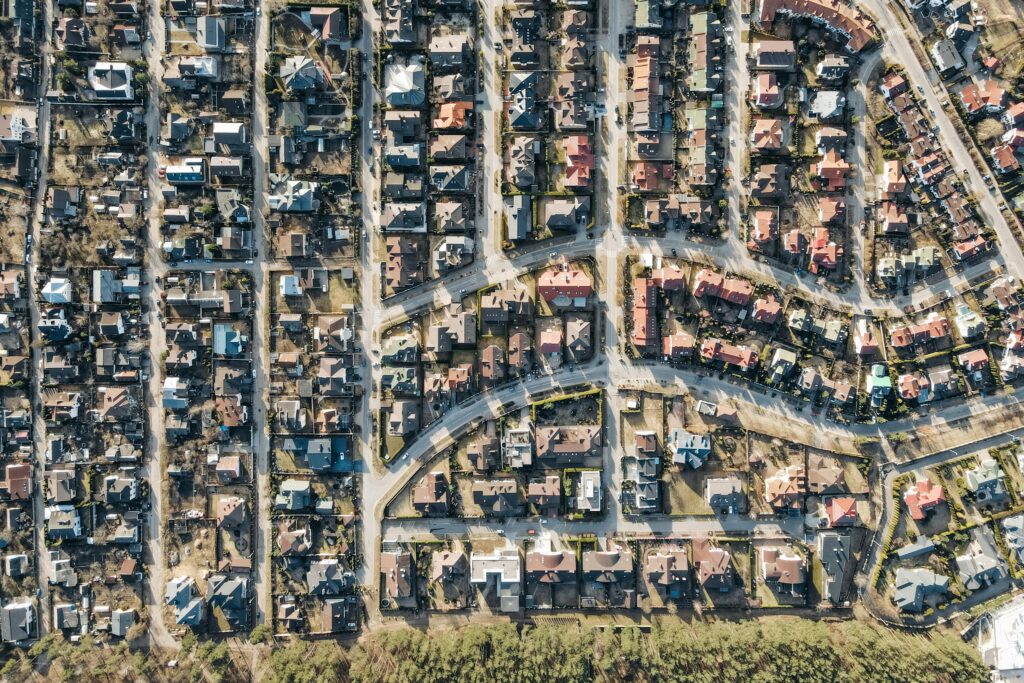
By 2026, institutional investors control close to 1 in 5 single-family homes nationally. In Atlanta — Brookings identified it as one of the most concentrated markets — some suburban zip codes have corporate ownership above 50% of all listed rental homes.
Half the rentable houses in a neighborhood, owned by one or two companies in another state, managed by algorithm, priced to maximize quarterly returns.
You may not know the name. But there is a very good chance Blackstone knows your zip code.
They are the largest corporate landlord in the world. Over 300,000 residential units across America. And at certain points, they raised rents in their properties by 64% over two years.
Not 6%. Not 14%. Sixty. Four. Percent.
While you were doing the math on your kitchen table — figuring out which bill to delay, which expense to cut, whether you could make it to the end of the month — Blackstone CEO Stephen Schwarzman’s net worth climbed past $50 billion.
I am not saying that to make you angry. I am saying it because that transfer of money — from your wallet, from your neighbor’s wallet, from the wallets of millions of people just trying to keep a roof over their heads — went somewhere. It did not evaporate. It landed. And we should be honest about exactly where it landed.
But here is the part that keeps the cycle spinning. And this is the part I need you to really sit with.
When institutional investors buy single-family homes — and they do, in bulk, in cash, above asking price, before the listing even hits your screen — they pull those homes out of the purchase market entirely. You never even got a chance to bid. The house you were saving for was gone before you knew it existed.
So what do you do? You keep renting.
And now there are more renters. Less inventory. Higher rents. Which means it is harder to save for a down payment. Which means fewer buyers. Which means more renters. Which means more profit for the very landlord who outbid you in the first place.
Round and round. By design.
And when you fall behind? When life happens — a medical bill, a lost shift, a week that breaks you — here is who you are dealing with. Research found that hedge funds are 68% more likely than small landlords to file for eviction. They charge more fees. They ignore repairs longer. They pursue lease terminations at rates that a small landlord — someone who knows your name, who sees you in the hallway, who has a human relationship with you — simply would not.
Because a small landlord has a person living in their property.
A hedge fund has a spreadsheet.
And a spreadsheet does not care that you have nowhere to go.
The People Living in Motels. The Ones Nobody Counts.
Melissa Krajewski is a home health aide. She lives with her two daughters — 10 and 13 — in a single room at the Kingston Motel in the Hudson Valley.
The room has two full-size beds and a cot in the corner where her 10-year-old sleeps. Food is stored in a mini fridge without a working freezer. Meals come from a microwave and a toaster oven. The 13-year-old keeps her beauty supplies in a small box with a mirror decorated with photos, because a teenager’s need to feel like herself doesn’t disappear just because her family is in crisis.

What Melissa pays for that room per month is more than the gated apartment complex directly across the road charges for a full unit. She pays more for a motel room with no kitchen and no tenant rights than she would for an actual apartment. Why? Because, as Carol Klocek of the Center for Transforming Lives put it: “It’s a trap, completely.
They’re paying the equivalent of rent, if not higher rates.” Once you lose your apartment — for any reason — landlords run credit checks, eviction record checks. A single eviction filing, even a wrongful one, follows you for years. So people get funneled toward places that will take them. Places that know their tenants have nowhere else to go and price accordingly.
“I don’t know how we get out of this,” Melissa told NBC News. “I really don’t.”
The First-Time Homebuyer Is Now 40. That Should Frighten Everyone.
The median age of the first-time homebuyer in America hit a record high of 40 last year, according to the National Association of Realtors. In 1991, that age was 28. We have delayed the first step of wealth-building for an entire generation by twelve years.
Every year you spend renting instead of owning is a year you’re building someone else’s equity instead of your own. Homeownership has historically been the primary way middle-class American families built wealth across generations. Push it back a decade, then another, and you don’t just hurt that generation — you hollow out what they can pass on to the one that follows.
Redfin’s February 2026 data: to afford the median-priced American home, you need to earn $111,252 per year. The median household income is around $86,000. That is a $25,000 gap. In California, a household needed about $237,000 to qualify for a mid-tier home mortgage in June 2025 — more than double the state’s median household income.
Zillow CEO Jeremy Wacksman said it in a Fortune interview just five days ago: he is “not expecting any relief in the short term.” People are having to wait longer to save for a down payment. Still longer. Jerome Powell, at a press conference late last year, said something unusually honest for a Fed Chair: “Housing is going to be a problem.” He acknowledged that the Fed can move rates, but cannot address what he called a “secular, structural housing shortage.” The tool everyone reaches for doesn’t fix the actual problem.
The Harris Poll asked American adults last year whether they agreed: “No matter how hard I work, I will never be able to afford a home I really love.” 42% of all US adults agreed. Nearly half of Gen Z agreed.
That’s not cynicism. That’s the rational conclusion of millions of people who looked at the actual math and concluded that the story they were told about how life is supposed to work no longer has them in it.

What I Actually Think, After All of This? Don’t skip
I want to be straight with you before I go.
I did not write this to make you angry. I wrote it because anger without information is just noise. And you have been kept in the noise long enough.
I have spent weeks inside the Harvard housing reports, the DOJ filings against RealPage, the Senate testimony on Blackstone, the Brookings research on institutional investors. And I kept coming back to the same conclusion every single time.
This is not a broken system.
A broken system malfunctions. This one performs. It rewards the people who already have capital. It lets algorithms coordinate your rent with zero penalty. It lets a $50 billion fund outbid you for a home before it hits Zillow. It builds luxury and calls it supply.
The system works perfectly. Just not for you. Not for the 12.1 million families who spent more than half their income on housing last year. Not for the nurse, the teacher, the driver who built this country and cannot afford to live in it anymore.
There are proposals. The Homes for American Families Act would ban institutional investors from buying single-family homes entirely. Real movement. Real names on it. Still not passed.
And while Washington catches up, real people are not waiting somewhere safe. They are doing the math on their kitchen table right now. Figuring out what gets cut. What gets delayed. What gets quietly let go.
Because the rent eats first.
It ate first last month. It will eat first next month. And it will keep eating first until something structurally breaks — not a report, not a task force, not a press release.
The question is not whether the system is failing you.
The question is how much longer you are going to wait for it to admit it.
If any of this is your life right now — a rent that jumped without warning, a neighborhood you got priced out of, a home you quietly stopped letting yourself want — say it in the comments. These things need to be said out loud. I read every one.
Thank you for visiting usaconcern.com and taking the time to read our content. Your visit truly matters to us. Stay alert and stay informed, because an informed voice can help shape a better future.
Feel free to leave a comment below with your thoughts!!


“Hey, I’m Vishal Srivastava — the person behind USAConcern.com. I started this site because I genuinely believe there are conversations happening in America that deserve more honest, human coverage. I write about health, mental wellness, lifestyle, and the cultural shifts shaping everyday American life. No corporate agenda. No fluff. Just real stories, real research, and my honest take on what it all means. Thanks for reading — it means more than you know.”