
India and the European Union have just finalized a landmark Free Trade Agreement (FTA), set to be formally announced on January 27, 2026. The deal slashes tariffs on European cars, boosts Indian textile exports, and is being hailed as the “mother of all deals.”
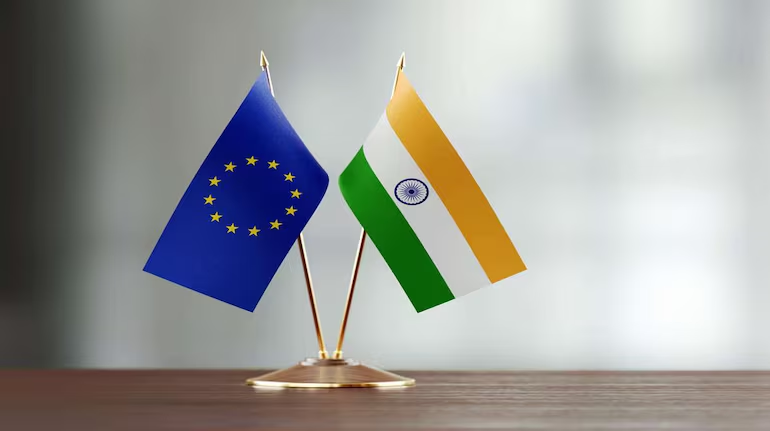
Key Highlights of the EU–India Trade Deal
1 Tariff Reductions
• European Cars: India will cut import tariffs on EU cars from 110% down to 40% immediately, with a gradual reduction to 10% over time.
• Luxury Segment: Applies to cars priced above €15,000 (≈₹16 lakh), benefiting brands like Volkswagen, Mercedes-Benz, and BMW.
Market Access for India
• Textiles & Garments: Indian exporters gain wider access to the EU market, expected to significantly boost India’s textile and garment sector.
• Services & IT: The deal strengthens India’s already growing services exports to Europe, which rose from €19 billion in 2019 to €37 billion in 2024.
Strategic Significance :
• Largest Goods Trading Partner: The EU is India’s biggest goods trading partner, with bilateral trade in services and goods steadily rising.
• Political Milestone: After nearly two decades of stalled negotiations, this agreement marks a decisive shift in India’s trade strategy.
• EU Perspective: European Commission President Ursula von der Leyen called the deal “historic,” emphasizing that a successful India makes the world more “stable, prosperous, and secure.”
Comparison of Benefits
| Aspect | India Gains | EU Gains |
|---|---|---|
| Automobiles | Lower tariffs on EU cars → more choices for consumers | Access to India’s vast car market |
| Textiles & Garments | Expanded exports to EU markets | Affordable imports from India |
| Services & IT | Boost to Indian IT & service exports | Skilled workforce and outsourcing benefits |
| Strategic Relations | Stronger integration with EU economy | Diversified supply chains beyond China |
Risks & Challenges
• Domestic Auto Industry: Indian carmakers may face tougher competition from European brands.
• Implementation Timeline: Legal scrubbing of the FTA text is still underway; full effect expected next year (2027).
• Sensitive Sectors: Agriculture and data protection remain areas where negotiations were delicate, and adjustments may be needed.
Why It Matters for India
• Boosts exports in textiles, garments, and IT services.
• Opens consumer choice with lower car prices.
• Strengthens geopolitical ties with Europe, balancing India’s trade dependence on other regions.
Conclusion
“The EU–India trade deal may be historic on paper, but its impact will be judged in practice—by the cars on Indian roads, the textiles in European stores, and the jobs it creates across both continents.”