
Okay so this is going to sound a little strange coming from someone who runs a website, but hear me out.
A while back I was at a get-together with people I genuinely like. Good food, good music; everyone seemed to be having a great time. And somewhere around the middle of the evening I realized I was kind of just… there. Physically present, completely checked out. Nodding at conversations I was not really in. Laughing at things half a second after everyone else because I was not fully listening.
I drove home that night feeling weirdly empty. Which made no sense because by every normal definition I had just spent time with people I care about.
But that feeling stuck with me. And a few weeks later, when I started seeing research about loneliness in America—actual studies, actual numbers—something clicked. Because what I felt that night had a name. And apparently a lot of people were feeling the exact same thing without talking about it.
So I figured someone should talk about it. Might as well be me.

More than half of Americans are lonely right now. Not occasionally. Not just on hard days. Chronically, quietly, deeply lonely—in the most connected country on earth. Here is what is really going on, why it keeps getting worse, and what we can actually do about it.
Think about the last time you had a truly good conversation.
Not a text exchange. Not a thumbs-up reaction to someone’s photo. Not a quick “How are you?” in the elevator that nobody expects an honest answer to. I mean a real conversation—the kind where an hour disappears, where someone actually listens, where you walk away feeling genuinely seen.
How long ago was that?
For a growing number of Americans, the honest answer to that question is uncomfortable. Days. Weeks. Sometimes longer than they want to admit.
We live in the most connected era in human history. The average American has hundreds of digital contacts. We carry a device that can reach almost anyone on the planet in seconds. Billions of messages are sent across this country every single day. And yet — in the middle of all this noise, all this contact, all this connectivity, more than half of Americans say they are lonely.
Not occasionally. Not just when life gets hard. Chronically. Persistently. In a way that is quietly making people sicker, sadder, and more disconnected from the world around them.
The U.S. Surgeon General called it a national epidemic. Researchers have compared its health damage to smoking a pack of cigarettes a day. And the numbers, when you actually sit with them, are genuinely alarming.
So what is actually happening? Why is the loneliness getting worse? And why is nobody talking about this loudly enough?
“Nearly 3 in 5 Americans say no one truly knows them. Let that sit for a moment.”

The Numbers Are Alarming—And Most People Have No Idea
I want to start with the data, because I think most Americans genuinely underestimate how widespread this problem has become.
According to the Cigna Group’s national survey of over 7,500 American adults, 57% of Americans are currently lonely. That is not a rounding error or a niche finding from a small study. That is the majority of the country — more than half of all adults — walking around with a chronic, unmet need for real human connection.
Gallup’s 2024 research found that 1 in 5 U.S. adults experiences loneliness every single day. Not occasionally — daily. Like clockwork.
And then there is this statistic from Cigna that I keep coming back to, because it is the one that really captures the depth of what we are dealing with: nearly 3 in 5 Americans say that no one truly knows them. Not their colleagues. Not their neighbors. Sometimes not even their own families.
The U.S. Surgeon General did not use the word epidemic casually. His 2023 advisory made it official — loneliness is a public health crisis in America. And far from improving, all the data we have collected since then suggests things are getting worse, not better.
| 57% of Americans are currently lonely — more than half the country, per Cigna’s national survey of 7,500+ U.S. adults. |
| ⚠️ This Is a Health Crisis — Not Just a Feeling The U.S. Surgeon General’s advisory states that chronic loneliness carries health risks equivalent to smoking 15 cigarettes every single day. It is directly linked to heart disease, stroke, dementia, anxiety, and early death. |
The Great Paradox: More Connected Than Ever, More Alone Than Ever
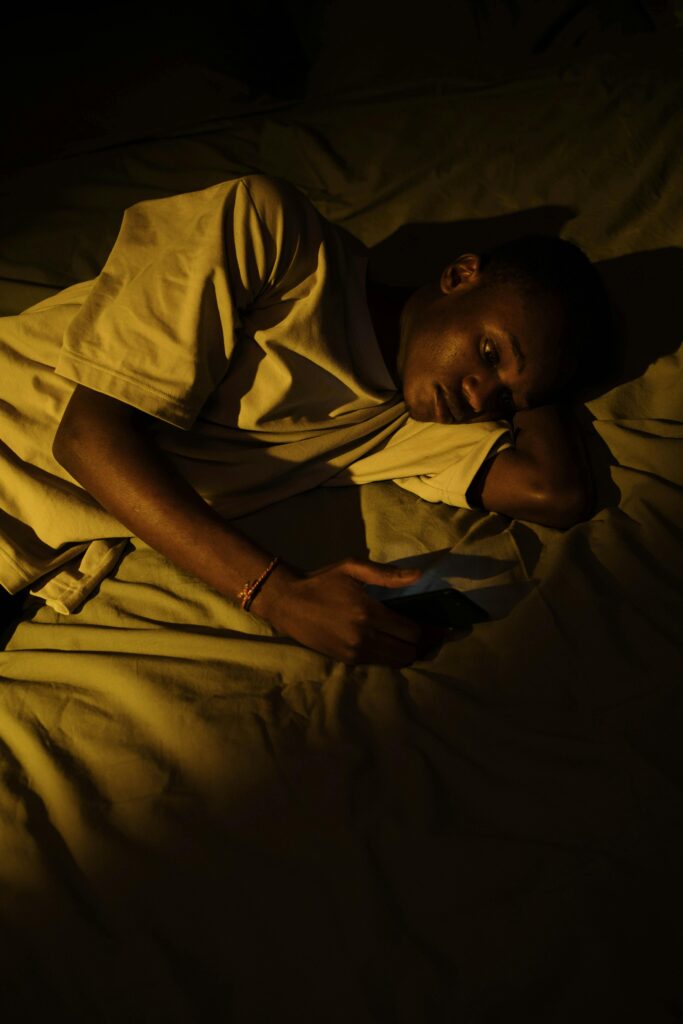
This is the part of the story that people find hardest to square. We are, by every measurable standard, the most technologically connected generation of human beings who has ever lived on this planet. Hundreds of social media connections. Group chats that never stop buzzing. Apps specifically engineered to help us stay in touch, find friends, and maintain relationships.
And yet the loneliness numbers just keep climbing.
Researchers have been wrestling with this paradox for years, and they keep arriving at the same distinction: the difference between contact and connection.
Contact is easy. You can get contact anywhere, anytime, at zero cost. A like on a photo is contact. A brief text reply is contact. Scrolling past someone’s vacation pictures is contact. We have more contact with more people than any generation in history.
But connection — real, meaningful, nourishing connection — is something else entirely. It requires time. Attention that is not split between three other screens. It requires the kind of conversation where you are actually present, actually listening, actually letting someone in. It requires vulnerability. And that kind of connection? We are getting dramatically less of it than we used to.
The Harvard Graduate School of Education’s Making Caring Common project put a number on it: 73% of Americans they surveyed identified technology as a contributing cause of loneliness in this country. Two thirds pointed to insufficient time with family. These are not abstract forces. They are choices—often structural choices—that we have made as a society and that we are now paying the price for.
| 1 in 5 U.S. adults experiences loneliness every single day — not occasionally, but as a daily feature of modern American life. (Gallup, 2024) |
“We have more contact with more people than ever before. We just have far less actual connection.”
Can I be real with you for a second?
I used to think staying in touch meant staying connected. Like if I replied to someone’s story or sent a meme or dropped a quick “haha” in the group chat — that counted as keeping the friendship alive. And technically I guess it does. But there is a massive difference between keeping something alive and actually nurturing it.
I have had weeks where I talked to dozens of people online and still somehow ended the week feeling like nobody actually knew what was going on with me. And I think if most people are honest — really honest — they would say the same thing.
We got really good at the surface level stuff. The real stuff got harder and we just kind of… stopped practicing it.
Who Is Actually Lonely in America? The Answer Will Surprise You
Most people, when they picture a lonely American, see an elderly person. Someone living alone after losing a partner. Someone whose children moved far away. Someone who does not get out much anymore.
That picture is real — and it matters. But it is only part of the story. And in some ways, it is not even the most urgent part.
The data consistently shows that younger Americans — Gen Z and Millennials — are actually lonelier than older generations, despite being far more digitally connected. According to Cigna’s research, young adults are among the loneliest age groups in the country. EdWeek’s 2025 report found that teenagers are among the loneliest people on the planet. Let that actually land: the most connected generation, by every digital measure, is also among the loneliest.
Adults in their 30s and 40s are also struggling far more than most people assume. Harvard’s Making Caring Common project found that people between the ages of 30 and 44 are the loneliest adult group — 29% report being frequently or always lonely. These are people in the middle of their lives. They may have families, careers, full calendars. And they still feel profoundly disconnected.
Financial pressure is making everything worse. A May 2025 study from the University of Southern California found that financial strain is directly linked to higher rates of anxiety and loneliness, with effects that compound over time. A November 2025 American Psychological Association poll found that more than 6 in 10 U.S. adults say societal division is a significant source of stress in their lives. When you cannot afford to attend the wedding, to make the dinner, to take the trip — you start declining invitations. That starts as a practical decision and, over time, quietly becomes isolation.
| 29% of Americans aged 30–44 say they are frequently or always lonely — the highest rate of any adult age group. (Harvard, Making Caring Common) |
| 💰 When Money Stops You From Showing Up A 2026 Fortune report found that two-thirds of Americans are skipping weddings, dinners, and social events because they simply cannot afford to go. Financial loneliness is real — and it compounds every other kind. |
What Is Actually Causing This? It Goes Deeper Than Your Phone

The easy answer is to blame social media and call it done. And social media does play a real role — Oregon State University research published in October 2025 found that people in the top 25% of social media usage were more than twice as likely to feel lonely. Passive scrolling, in particular, appears to be especially damaging. Consuming other people’s curated highlight reels without genuine interaction does not make you feel connected. It makes you feel more invisible.
But the roots of the loneliness epidemic go deeper than any single app or platform.
The Way We Work Changed Everything
Remote work gave millions of Americans real flexibility. But it also quietly removed something most of us did not realize we valued: the daily, low-stakes human contact of being in a shared physical space. Even if your office relationships were never deep friendships, they provided a rhythm of interaction that turns out to matter enormously. It normalized presence. It created accidental connection.
Take that away, and you discover the hole it left behind.
We Stopped Showing Up to Our Communities
Community participation in America has been declining steadily for decades. Fewer people attend religious services. Fewer people volunteer. Fewer people join neighborhood groups, civic organizations, or local sports leagues. The bowling leagues, block parties, and church suppers that once naturally anchored American social life have slowly faded — and nothing has meaningfully replaced them.
Harvard sociologist Robert Putnam documented this collapse in his landmark book Bowling Alone back in 2000. In the twenty-five years since, the trend he identified has only accelerated.
The Friendship Gap Nobody Talks About
Research shows that men, in particular, are struggling. The American Institute for Boys and Men found that men are now five times more likely than they were in 1990 to say they have no close friends at all. Many men’s social lives quietly narrow after their twenties — the built-in social structures of school and early career disappear, and nothing takes their place. When a relationship ends or a life transition hits, many men find themselves with no meaningful support network at all.
This is not just sad — it is dangerous. The same research notes that men die by suicide at four times the rate of women, and social disconnection is consistently identified as a key risk factor.
“Five times as many men say they have no close friends as did in 1990. We are raising a generation of isolated men and calling it independence.”
What Loneliness Is Doing to Our Bodies — This Is the Part People Do Not Know
I want to spend real time on this section, because I think most Americans have no idea how physically destructive loneliness actually is.
When the Surgeon General compared chronic loneliness to smoking 15 cigarettes a day, he was not speaking metaphorically. He was describing documented health outcomes. The research linking persistent social isolation to cardiovascular disease, high blood pressure, weakened immune function, and shorter lifespan is overwhelming and consistent.
The cognitive effects are just as alarming. The CDC has found that social isolation increases the risk of dementia by 50%. That is not a small number — that is half again as likely to develop one of the most devastating conditions in medicine, simply from being chronically disconnected from other people.
Loneliness activates the same regions of the brain as physical pain. It is not a metaphor to say that loneliness hurts. It literally hurts. And it creates a self-reinforcing cycle: isolation leads to anxiety, anxiety makes social interaction feel harder and more threatening, and that difficulty leads to more isolation.
The workplace consequences are significant too. Cigna’s research found that 52% of American workers report feeling lonely — and lonely workers are significantly more likely to be disengaged, frequently absent, and actively looking for other jobs. The estimated annual cost of stress-related workplace absence in America is $154 billion. Loneliness is not just a personal tragedy. It is an economic drain on the entire country.
| 50% Social isolation increases the risk of dementia by 50%, according to CDC research — one of the most alarming health consequences of chronic loneliness. |
| 🫀 Your Heart Pays the Price Chronic loneliness is associated with a 29% increased risk of heart disease and a 32% increased risk of stroke. The body treats social disconnection as a form of ongoing threat — and ongoing threat damages everything. |
Here is my honest take on this and you can completely disagree with me.
I think we quietly decided that relationships were supposed to be easy. And the moment they required effort — a phone call instead of a text, showing up when you did not feel like it, having an awkward conversation instead of just letting things drift — we chose the easier option. Every single time.
And look, I get it. Life is busy. Everyone is tired. Nobody has unlimited energy. But I think we underestimated how much those small choices added up. Every time you picked the easier option you were also, without realizing it, choosing to be a little more alone.
That is not a judgment. That is just what the data shows. And honestly it is something I have had to think about in my own life too.
The AI Companionship Question — And Why It Makes Me Uneasy

I did not expect to be writing this in 2026. But here we are.
A growing number of lonely Americans are turning to artificial intelligence for companionship. AARP’s December 2025 research found that nearly a quarter of lonely adults express interest in AI companionship technologies. Apps designed to simulate emotional connection and conversation are gaining users rapidly. Some people report finding them genuinely helpful — a bridge through a painful period, a way to practice talking, a presence during isolated evenings.
I do not want to dismiss that. Loneliness is painful, and people find relief where they can.
But I think we need to be honest about what technology can and cannot do here. A chatbot can simulate presence. It cannot replace it. It can reflect your words back to you, but it cannot truly see you. And the risk — which the AARP researchers acknowledged directly — is that AI companionship makes us comfortable with a substitute while real connection continues to slip further away.
Technology rarely creates deep connections for people already struggling with loneliness. It maintains existing connections for people who already have them. That is an important distinction. The answer to feeling unseen is not a better algorithm. It has always been, and will always be, another human being.
So What Do We Actually Do? Here Is What the Research Suggests
I am going to be careful not to reduce twenty years of serious research to a quick list. The loneliness epidemic is a structural problem with structural causes, and it will ultimately require structural solutions — better urban design, stronger community institutions, workplaces that genuinely value human connection, policies that protect family time.
But there are also things that individual people can do right now. They are not complicated. They are just harder than scrolling — and they require the kind of deliberate effort that modern life has trained us away from.
I want to be upfront about something before I give you a list of suggestions. I have read probably a dozen articles about loneliness over the past few months while researching this piece. And almost every single one ends the same way — a tidy bullet list of tips that feels completely disconnected from everything that came before it. “Call a friend.” “Join a Spiritual club.” “Put your phone down.” As if the person reading hasn’t already thought of that. As if the problem is that nobody told them.
So I am going to try to be more honest than that.
A few months ago I was going through a stretch where I felt genuinely disconnected — not dramatically, not in a way I would have described as a crisis, but in that quiet, persistent way where you realize you have been on autopilot for weeks. I had plenty of contact with people. I just had almost no real connection with anyone.
What actually helped was not an app, not a productivity hack, and not a self-help framework. It was embarrassingly simple. I texted three people I had been meaning to properly catch up with and asked if they wanted to talk — not text, actually talk. One of those turned into a two hour phone call that I did not know I needed until it was happening.
That is it. That was the thing that moved the needle. And the research, as it turns out, backs this up completely — the interventions that actually reduce loneliness are almost always low-tech, low-drama, and require nothing more than a little deliberate effort and the willingness to be slightly uncomfortable.
None of this is revolutionary advice. But the research on what actually works is remarkably consistent: show up, be present, be deliberate, and do it again next week. That is how connection is built. And that is how epidemics end.
Okay I have to be straight with you about how I feel about this one.
When I read that people are turning to AI chatbots because they feel too lonely to talk to actual humans — I did not feel superior or judgmental. I felt genuinely sad. Not at those people. For those people. Because loneliness can get to a place where talking to a machine feels safer than talking to a person and that is a really painful place to be in.
But I also think we need to be honest that this is not a solution. It is a painkiller. And painkillers are useful — but they do not fix the thing that is causing the pain.
The real fix is messier and slower and more uncomfortable. It is the stuff I talk about in the next section. And honestly it is the stuff most of us already know — we just keep putting it off.
A Final Thought
I keep returning to that Cigna statistic. Nearly 3 in 5 Americans say that no one truly knows them.
Think about that for a moment. More than half of the people around you — at work, in your neighborhood, in your family — are walking around with the quiet ache of feeling fundamentally unseen. Not all the time. Not necessarily in a dramatic way. But often enough that they noticed it when a survey asked.
That is heartbreaking. And in a country that has always prided itself on community, on neighborliness, on the idea that we look out for one another — it should also feel like a failure that we are collectively responsible for fixing.
The loneliness epidemic is not happening because Americans are cold people. It is happening because the structures that used to naturally bring us together — shared institutions, physical community spaces, slower lives with more time for each other — have been eroding for decades. And we filled the space they left with screens that are excellent at keeping us occupied and remarkably poor at making us feel genuinely connected.
The good news — and there genuinely is good news — is that connection has not disappeared. It has just become harder to find than it used to be. It requires more intention, more effort, and more willingness to be a little uncomfortable.
But it is still there. In the conversation you have not had yet. In the invitation you keep meaning to accept. In the person sitting across from you right now who might be quietly wondering if anyone really sees them.
Alright I am going to wrap this up the same way I started it — honestly and a little awkwardly.
After I finished writing this article I sat back and thought about my own life for a minute. And I realized there were probably three or four people I had been meaning to properly catch up with for months. Not text — actually talk. I kept telling myself I would do it when things slowed down.
Things do not slow down. You have to choose to slow down.
So I sent a few messages. Real ones. Not “heyy long time” messages — actual messages that said something. And one of those conversations turned into a two hour phone call that I genuinely needed and did not know I needed until it was happening.
I am not saying that is some big heroic act. It is just a phone call. But I think that is kind of the point. The things that actually help with loneliness are embarrassingly simple. They are just harder than scrolling. And we live in a world that has made scrolling very very easy.

So yeah. Go make the call. Send the real message. Show up for someone this week even when it is inconvenient.
You will feel better. They will feel better. And honestly — that is kind of the whole point of being around other people in the first place.
They probably are. Go ahead and look.
“Have you or someone you know felt this way? I would genuinely love to hear your thoughts in the comments below.”
| 📋 WHAT YOU NEED TO KNOW |
| ✔ 57% of Americans are currently lonely — more than half the country (Cigna, 2025) |
| ✔ 1 in 5 U.S. adults experiences loneliness every single day (Gallup, 2024) |
| ✔ Nearly 3 in 5 Americans say no one truly knows them |
| ✔ Gen Z and young adults are lonelier than seniors, despite being more digitally connected |
| ✔ People aged 30–44 are the loneliest adult group at 29% (Harvard, Making Caring Common) |
| ✔ Chronic loneliness carries the same health risk as smoking 15 cigarettes a day (Surgeon General) |
| ✔ Social isolation increases dementia risk by 50% (CDC research) |
| ✔ 52% of American workers feel lonely — costing $154 billion annually in productivity |
| ✔ Men are now 5x more likely to have no close friends than they were in 1990 |
| ✔ The fix is not technological — it is showing up, deliberately, for the people around you |
Thank you for visiting usaconcern.com and taking the time to read our content. Your visit truly matters to us. Stay alert and stay informed, because an informed voice can help shape a better future.
Feel free to leave a comment below with your thoughts!!


“Hey, I’m Vishal Srivastava — the person behind USAConcern.com. I started this site because I genuinely believe there are conversations happening in America that deserve more honest, human coverage. I write about health, mental wellness, lifestyle, and the cultural shifts shaping everyday American life. No corporate agenda. No fluff. Just real stories, real research, and my honest take on what it all means. Thanks for reading — it means more than you know.”