
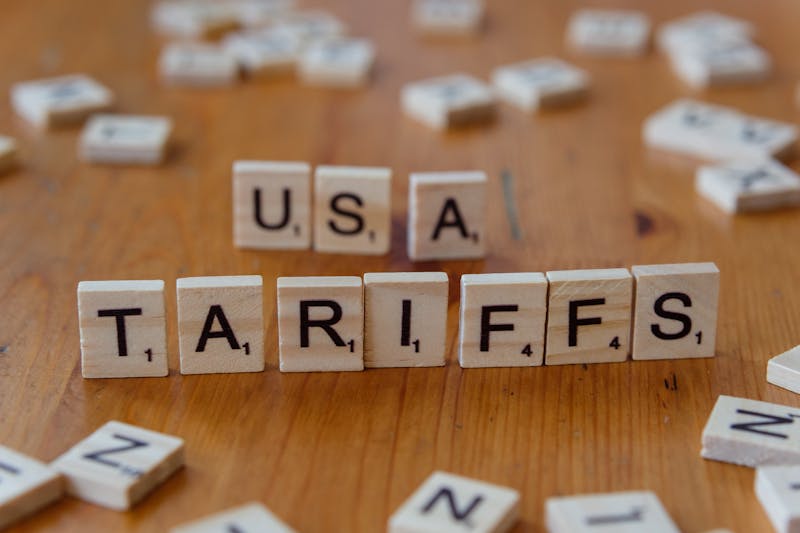
A year ago today, they called it Liberation Day. They said prices would fall, factories would come roaring back, and America would get rich. One year later, the average household is $3,800 poorer. And the worst is still coming.
A year ago, most people didn’t think tariffs had anything to do with them.
They sounded like something distant—policy talk, TV debates, numbers on a chart somewhere in Washington. Not something that shows up in your grocery bill or your electricity statement.
But over the past year, something shifted.
Not all at once. Not dramatically. Just small things. Coffee is costing a little more. Kids’ clothes are getting replaced less often. That moment at checkout where you pause—not because you bought more, but because the total feels off.
No one really explained it clearly. Not in a way that connects policy to everyday life.
So let’s do that now.
Because April 2, 2026 marks one year since what was called “Liberation Day.” And whatever you believed about it back then—today we have something better than promises.
“If you’ve felt like your money isn’t stretching as far as it used to — you’re not imagining it.”
Over the past few weeks, multiple datasets started pointing in the same direction — from Yale’s Budget Lab to federal labor data.
Individually, each number tells part of the story. Together, they tell something much harder to ignore:
- $3,800 Average per-household consumer loss from all 2025 tariffs combined (Yale Budget Lab, April 2026)
- 89,000 U.S. manufacturing jobs lost from April 2025 to February 2026—the exact sector tariffs were supposed to save (BLS)
- $1,700 What the average household paid in extra costs from February 2025 through January 2026 alone (CFR poll data)
- 22.5% The average effective U.S. tariff rate after Liberation Day—the highest since 1909
- 65% Share of Americans who told pollsters in January 2026 that tariffs made everyday goods less affordable
- +2.8% How much food prices rose across the full year of 2025 tariff actions — with more still coming
Before going further, one thing matters this isn’t about picking sides.
If a policy works, it should show up in people’s lives. If it doesn’t, that should be visible too.
So instead of arguments or opinions, let’s stay with something simpler — what actually changed in people’s wallets over the past year.
I don’t care which team you’re on. Democrats have their own long list of economic failures. Politicians on both sides have been promising to fix the cost of living for thirty years while regular people get squeezed. But today, on the one-year anniversary of Liberation Day, I want to do something nobody on television has done clearly enough: sit down with the actual numbers and tell you, in plain language, what happened to your money.
Because you deserve to know. And nobody’s telling you the full story.
First, What Actually Happened on Liberation Day
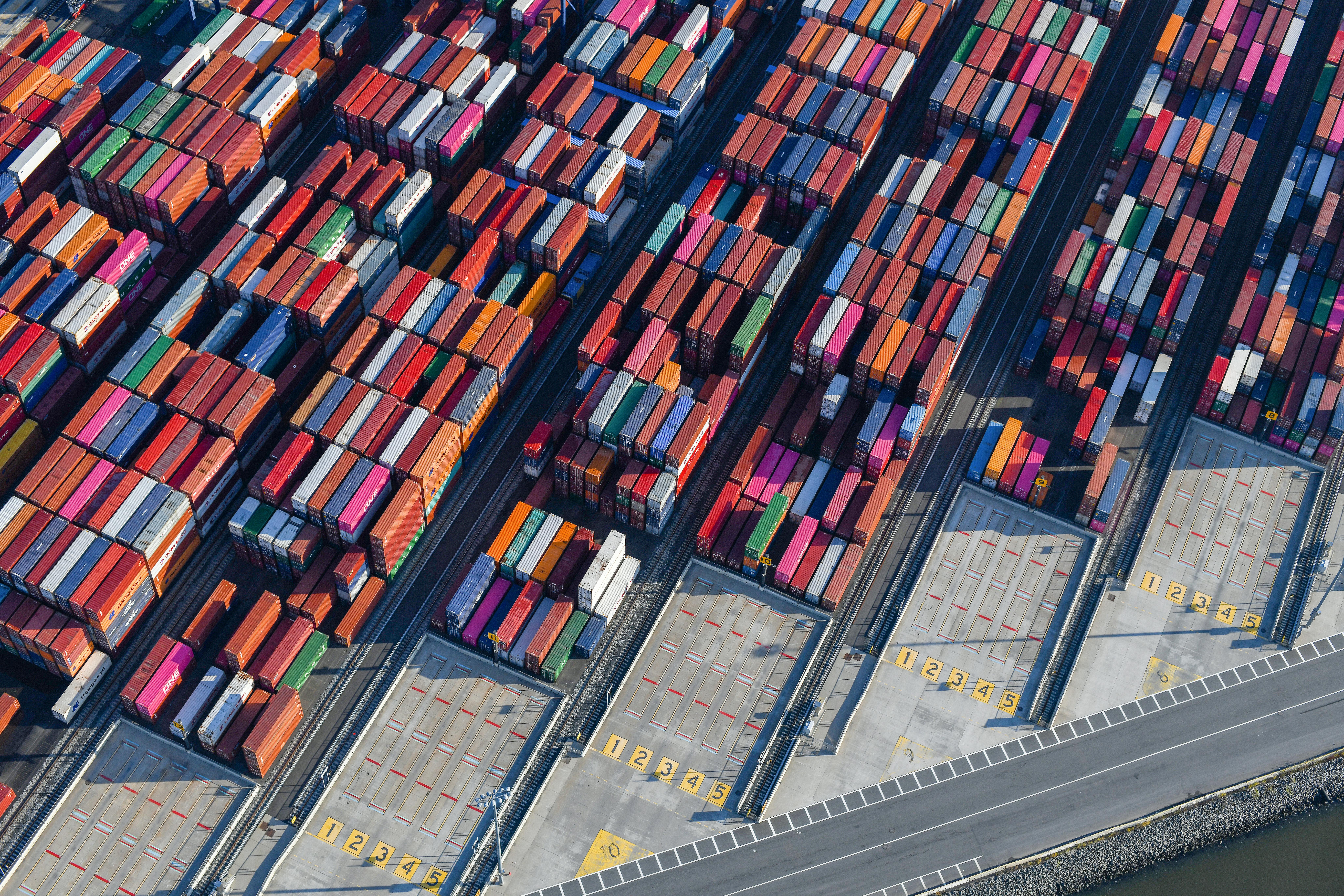
On April 2, 2025, the Trump administration announced what it called “reciprocal tariffs” — import taxes on goods coming from nearly every country in the world, at rates not seen since 1909.
The idea was simple, at least in the way it was explained in the Rose Garden: foreign countries charge us high tariffs, so we’ll charge them high tariffs back. Level the playing field. Force companies to bring manufacturing home.
The actual policy was more complicated and more chaotic than any poster board could capture. A universal 10 percent tariff was placed on virtually all imports. Then country-specific rates stacked on top of that—20 percent on European goods, rates as high as 50 percent on countries with large trade surpluses with the U.S., and a jaw-dropping 125 percent on Chinese goods during a brief escalation that rattled markets worldwide.
Then, just seven days after Liberation Day, Trump paused most of the country-specific tariffs for ninety days, citing economic concerns.
Then they were extended. Then partially reinstated. Then partially rolled back again. Over the course of 2025, U.S. tariff policy changed more than 50 times. If you tried to follow it, you probably got whiplash. If you ran a business that imported anything, you probably had a panic attack.
“The chaotic storm of uncertainty forced me to fire 10 percent of my workforce in 2025,” said Hanna Scholz, president of Bike Friday, an Oregon-based custom bicycle manufacturer. “Even now that Liberation Day tariffs are gone, the impact is still trickling through the whole supply chain in the form of cost and price increases, supplier inventory shortages, and uncertainty.”
By February 2026, the Supreme Court ruled that the tariffs Trump imposed under the International Emergency Economic Powers Act — the legal authority he used to declare a “national emergency” over trade — were unconstitutional.
The government is now working on a plan to refund approximately $166 billion in tariffs that were wrongly collected, with details expected by mid-April. But here’s the thing about money that leaves a system: it doesn’t just walk back in and undo the damage it caused on the way out.
The prices that rose stayed risen. The jobs that left haven’t come back. The uncertainty that froze investment and slowed hiring is still working its way through the economy like a splinter the body hasn’t finished dealing with.
The Promises vs. The Reality
Let’s do something simple. Let’s look at exactly what was promised and exactly what happened. Because nobody wants to be talked down to with jargon. You want to know if this worked?
| The Promise | The Reality |
|---|---|
| “Jobs and factories will come roaring back.” | 89,000 manufacturing jobs were LOST since Liberation Day. Manufacturing employment has declined every single month since April 2025. |
| “Prices for consumers will drop as domestic production picks up.” | Inflation sits at 2.4%. Fed Chair Jerome Powell said tariffs boosted it above the 2% target. Average household costs up $1,700–$3,800. |
| “Foreign nations will pay, not Americans.” | Businesses paid ~80% initially but are now rapidly passing costs to consumers. You are paying it. |
| “Tariffs will bring in trillions to pay down the debt.” | Revenue was raised but fell far short of projections. The trade deficit grew, not shrank. The national debt continues to rise. |
| “Foreign investment will flood into America.” | Foreign direct investment in 2025 was $288 billion—slightly less than the year before and below the 10-year average. |
Every single major promise failed to materialize. Not some of them. All of them. And the people absorbing the cost of those broken promises aren’t lobbyists or hedge fund managers. They’re the dental hygienist in Columbus. The truck driver in Texas. The single mom in Georgia trying to figure out why her grocery bill jumped again without anyone explaining why.
Your Grocery Bill Is About to Get Even Worse. Here’s the Timeline Nobody Is Telling You.

Here’s the part that I want you to really sit with, because I don’t think most people understand it — and it’s the most important thing in this entire article.
The grocery prices you’ve seen go up over the past year? That’s not the full impact. Not even close.
According to industry analysts at market research firm Spins, food price increases from tariffs typically hit grocery shelves with a lag of 12 to 18 months after the tariffs are actually imposed. The Liberation Day tariffs were announced on April 2, 2025. Do the math: that means the full impact hits between April and October 2026. Right now. The months ahead of us.
“It is not that there was no impact from tariffs because we didn’t see consumer prices rise in 2025,” explained Ben Lerman, Spins VP of growth consulting, earlier this year. “It is just that they haven’t had time to flow through the system yet. And it is in 2026, and potentially even late 2026, that we will start to see consumers feel a pinch of these higher tariffs.”
We already know what happened to some specific food items. After the Liberation Day announcement, food prices overall rose about 1.6 percent—equivalent to an entire year of normal grocery inflation, compressed into one announcement. Fresh produce rose 4 percent across all 2025 tariff actions.
Sugar and sweets prices surged 5.7 percent year-over-year through January 2026. Brazilian coffee imports now face a 50 percent U.S. tariff. U.S. corn exports to China collapsed by 99 percent. U.S. soybean exports to China fell 78 percent through August 2025.
And still—the biggest wave hasn’t arrived yet.
“Manufacturers and retailers have shielded consumers from most tariff-related costs so far. That shield is coming down in 2026.” — Industry Analysis, Spins VP of Growth Consulting”
Why haven’t prices risen more yet? Because businesses — especially grocery retailers operating on razor-thin margins — were absorbing the costs rather than passing them on, hoping for clarity on policy direction. According to JPMorgan, businesses footed roughly 80 percent of the tariff bill in 2025. But that’s changing fast. “A lot of our clients really didn’t want to pass the costs on,” said Kyle Peacock of Peacock Tariff Consulting, “but now they’re really having to.”
That transfer — from businesses absorbing the cost to you absorbing the cost — is happening right now. This spring. In the checkout line that already feels longer than it should.
The Manufacturing Boom That Never Came
The cruelest part of Liberation Day — the part that makes my stomach turn — is who it was supposed to help.
It was sold to blue-collar workers. To the guy in Indiana who used to work at a factory and watched that factory close and ship jobs to Vietnam. To the family in Ohio that watched their town hollow out over twenty years of deindustrialization.
To people who had legitimate, righteous grievances about trade policy. They were told: this time is different. This time, the tariffs will bring the factories back.
It didn’t happen.
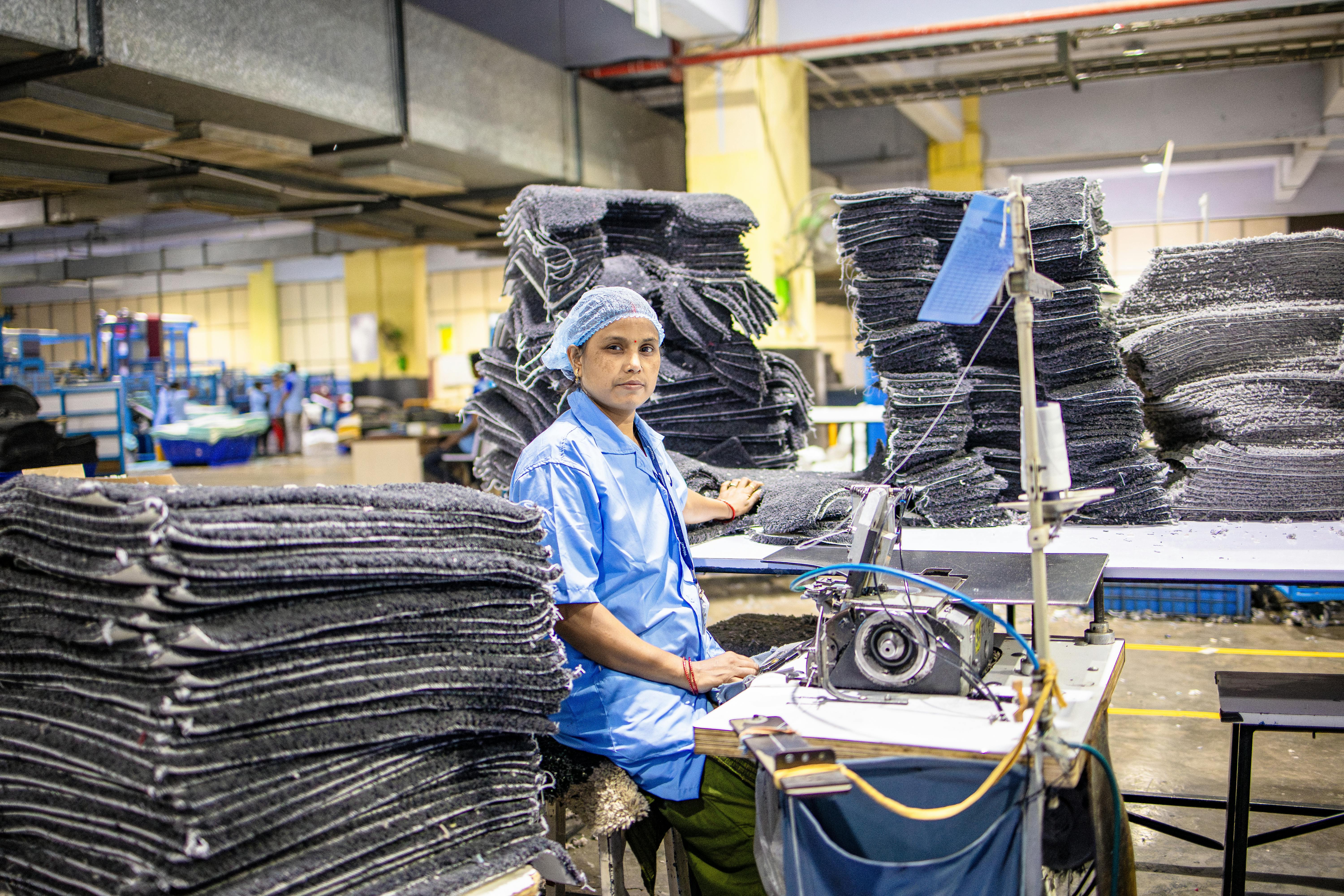
From April 2025 to February 2026, the United States lost 89,000 manufacturing jobs. That’s an average of about 9,000 jobs a month — every month — since Liberation Day. Overall blue-collar employment declined by around 190,000 jobs since the tariffs went into effect. U.S. factories employ 12.7 million people today — 72,000 fewer than the day Trump stood in the Rose Garden and made his promise.
Why? Because tariffs don’t just hit finished imported products. They also hit the imported components and raw materials that American manufacturers need to make things.
When the price of imported steel goes up, it doesn’t help a factory that uses steel — it hurts one. When Chinese electronics components cost 125 percent more, assembly lines get more expensive, not cheaper. And companies that can’t afford the uncertainty cut the one thing they control: staff.
The Manufacturing Jobs Promise vs. Reality by the Numbers
- 89,000Manufacturing jobs lost from April 2025 to February 2026 (Bureau of Labor Statistics)
- 190,000Total blue-collar jobs lost since Liberation Day (BLS, broader calculation)
- 8 monthsConsecutive months of manufacturing job losses after Liberation Day — every single month
- 4.5MManufacturing jobs the U.S. has lost since 2000 — a trend tariffs have not reversed
- 1/3Share of U.S. equipment manufacturers in 2025 surveys who said they planned to move production offshore, citing cost (Reshoring Institute)
“The manufacturing boom President Trump promised is going in reverse,” the Wall Street Journal reported in February 2026. “After years of economic interventions, fewer Americans work in manufacturing than at any point since the pandemic ended.”
One economist put it bluntly: “The U.S. is in the early days of a manufacturing contraction that will run through most of 2026, even if the tariffs are lifted today. We should call it the deindustrialization of America.”
The people who were told they’d be liberated by Liberation Day are the ones who lost their jobs because of it.
What $3,800 Actually Looks Like in Your Life

Numbers are easy to tune out. $3,800. $1,700. These are just figures on a page until you make them real. So let me try.
The Yale Budget Lab released data today — on the exact one-year anniversary of Liberation Day — showing that all 2025 tariff actions combined raised the average per-household consumer loss to $3,800. For households at the bottom of the income distribution, the annual loss is $1,700.
$3,800 is four months of grocery bills for a family of four. It’s a car repair you couldn’t make, so you kept driving the car you knew was unsafe. It’s the credit card balance that didn’t go down last year despite the fact that you felt like you were working just as hard. It’s the dental appointment you keep rescheduling. It’s the kids’ school clothes you kept hoping to buy “next month.” It’s the small, quiet way that life gets a little more impossible without anyone saying the word tariff out loud to explain why.
And the hit is regressive. That’s the word economists use — it means the burden falls harder on people who have less. Lower-income households spend a greater share of their income on the kinds of essentials that tariffs made more expensive: groceries, clothing, everyday goods.
The wealthiest households barely noticed. The families already stretched thin are the ones absorbing the largest percentage of the cost.
“Tariffs are taxes. And like all consumption taxes, they’re regressive — the less you earn, the bigger the bite.”— CSIS Analysis of Liberation Day Tariffs”
This is not an accident. It’s the geometry of how the policy works. And it matters, because Liberation Day was sold as a working-class victory. The people cheering loudest for it were the people it ended up hurting the most.
Healthcare, Gas, and the Rest of the Bill You’re Already Paying
The tariff story doesn’t exist in isolation. It’s stacking on top of everything else that’s already squeezing American households in 2026.
Health insurance premiums are up 114 percent for marketplace plans this year compared to last — not because of tariffs directly, but because the ACA’s enhanced premium tax credits expired at the end of 2025, and 1.4 million fewer Americans have chosen marketplace coverage as a result. The families still enrolled are paying dramatically more.
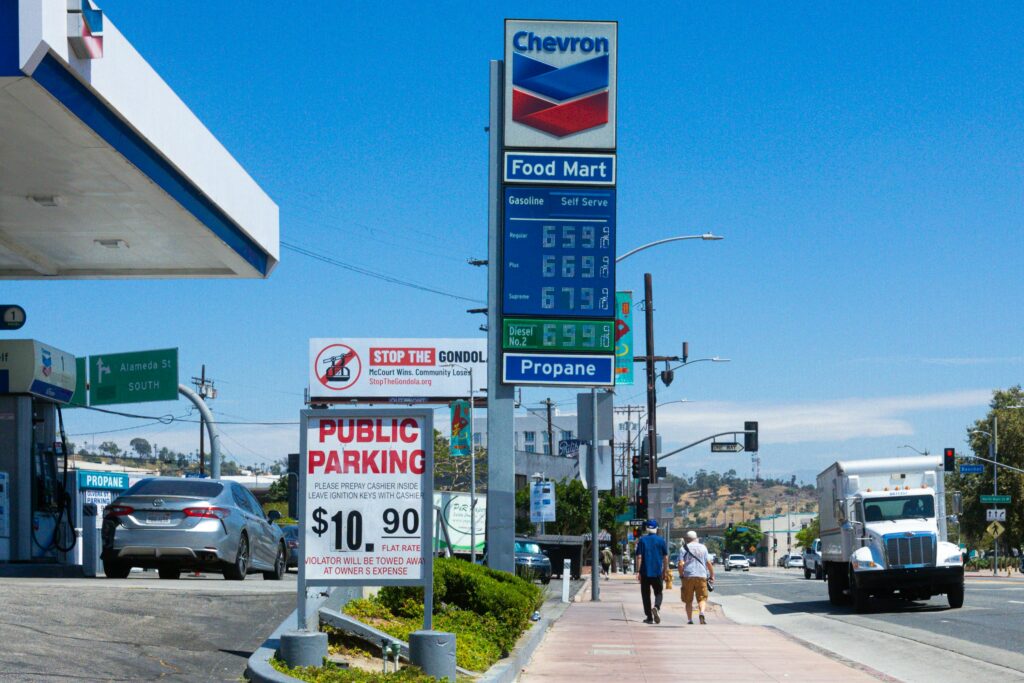
Gas prices are hovering near $3.93 nationally, with economists warning that the U.S.-Iran military conflict could push energy prices significantly higher. Federal Reserve Chair Powell said last month that inflation remains elevated partly because “these readings largely reflect inflation in the goods sector, which has been boosted by the effects of tariffs” — and that was before any further escalation in the Middle East.
Electricity prices in 2025 increased at 2.5 times the annual inflation rate — the highest annual increase since December 2014. Millions of residents in 49 states and Washington D.C. are facing higher utility bills or proposals for increased rates by 2027, totaling more than $92 billion in consumer costs by 2028.
So when you ask yourself why you’re working just as hard as you were three years ago and it still doesn’t feel like enough — this is why. It’s not your budgeting. It’s not your lifestyle choices.
It’s the compound weight of policy decisions hitting your household from every direction simultaneously, while cable television argues about the politics and nobody does the math out loud for the people actually living it.
The Refund Nobody Is Talking About — And Why It Won’t Help You
Here’s something interesting that’s been buried in the business pages: because the Supreme Court struck down the Liberation Day tariffs in February 2026, the federal government now owes businesses approximately $166 billion in refunds for tariffs that were wrongly collected.
One hundred and sixty-six billion dollars.
You might be thinking: great. Does that mean prices come back down?
Probably not, and here’s why. Tariff consultant Kyle Peacock explained the problem clearly: “We may see a wave of litigation that comes through from consumers to retailers, but it’s at the point where retailers haven’t received the funds yet.
So even if they were going to pass it back to the consumers, it’s this vicious cycle.” Companies raised prices to survive. They’re not going to spontaneously lower them just because they got a refund — especially in a world where new tariffs (Trump imposed a 15 percent global tariff after the Supreme Court ruling) mean costs are still elevated anyway.
Prices are sticky going up and almost never sticky going down. The grocery shelf that costs more today won’t cost less next Tuesday because of a business refund that may or may not get passed along through a supply chain that touches dozens of companies before it reaches you.
The money went into the system. You paid for it. The receipt was real. The refund isn’t coming your way.
What Comes Next — And What You Can Actually Do
Let me be honest with you the way I always try to be: I don’t have a magic solution. I’m not going to end this with five budgeting tips as if the problem is your latte habit. The problem isn’t your latte habit.
What I can tell you is what’s coming so you’re not blindsided by it. The biggest tariff impact on grocery prices is expected to hit between now and October 2026. If you’ve been thinking “okay, I’ll wait for things to stabilize” — the stabilization isn’t coming this summer. Meat, produce, packaged foods, imported beverages, clothing, and household goods are all in line for price increases that the supply chain has been absorbing but can’t absorb much longer.
What that means practically: if you’ve been planning a large purchase — appliances, electronics, car, furniture — and you have the ability to make it now, the economic evidence suggests waiting will cost you more, not less. If you’re building an emergency fund, this is not the year to pause that.
The combination of tariff-driven price increases, healthcare cost spikes, and energy price pressure means household budgets are going to be squeezed harder in Q2 and Q3 of 2026 than they were in 2025.
And if you’re one of the 89,000 people who lost a manufacturing job since Liberation Day — or one of the many more who lost blue-collar work in related sectors — I want you to know: this happened because of policy decisions made by people who said they were making those decisions for you. You did nothing wrong. Your town didn’t fail. The promise was the problem, not you.
The Part Nobody in Washington Will Say Out Loud
A year ago today, Liberation Day was sold as the moment America stopped getting taken advantage of. As the day working-class people finally had a president who was going to fight for them with the one tool that would actually work.
The data says: 89,000 manufacturing jobs gone. $3,800 per household in consumer losses. Food prices about to spike harder in the months ahead. Healthcare costs through the roof. The trade deficit grew instead of shrinking. Foreign investment fell. Manufacturing employment declined every single month.
Call it whatever you want — policy, strategy, correction.
But for a lot of households, it didn’t feel like a win.
It felt like an extra bill that showed up quietly and never got explained. — and it was handed to the people who could least afford to pay it.
Take someone working a stable job — say a dental hygienist in Ohio.
Nothing about her routine changed this year. Same clinic. Same hours. Same grocery store she’s been going to for years.
But her spending did.
Not because she started buying more — but because the same things began costing more, slowly enough that it’s hard to point to a single moment and say, “That’s when it happened.”
That’s the story of Liberation Day, one year later. And I think you deserved to hear it straight.
What Are You Paying More For?
If you’ve noticed price increases in groceries, healthcare, gas, or housing that you can’t explain — you’re not imagining it. The data backs you up. Share this story with someone who needs to read it.
Thank you for visiting usaconcern.com and taking the time to read our content. Your visit truly matters to us. Stay alert and stay informed, because an informed voice can help shape a better future.
Feel free to leave a comment below with your thoughts!!


“Hey, I’m Vishal Srivastava — the person behind USAConcern.com. I started this site because I genuinely believe there are conversations happening in America that deserve more honest, human coverage. I write about health, mental wellness, lifestyle, and the cultural shifts shaping everyday American life. No corporate agenda. No fluff. Just real stories, real research, and my honest take on what it all means. Thanks for reading — it means more than you know.”