
By Vishal Srivastava | usaconcern.com, published on Feb 07, 2026
Two hospitals. Twelve miles apart. In one, a woman delivers her baby safely with access to specialists, follow-up care, and a support team. In the other — serving a poorer, predominantly Black neighborhood — that same woman faces a dramatically higher risk of complications, or death. Same country. Same year. Completely different outcomes. This is the reality of health inequity in America in 2026.
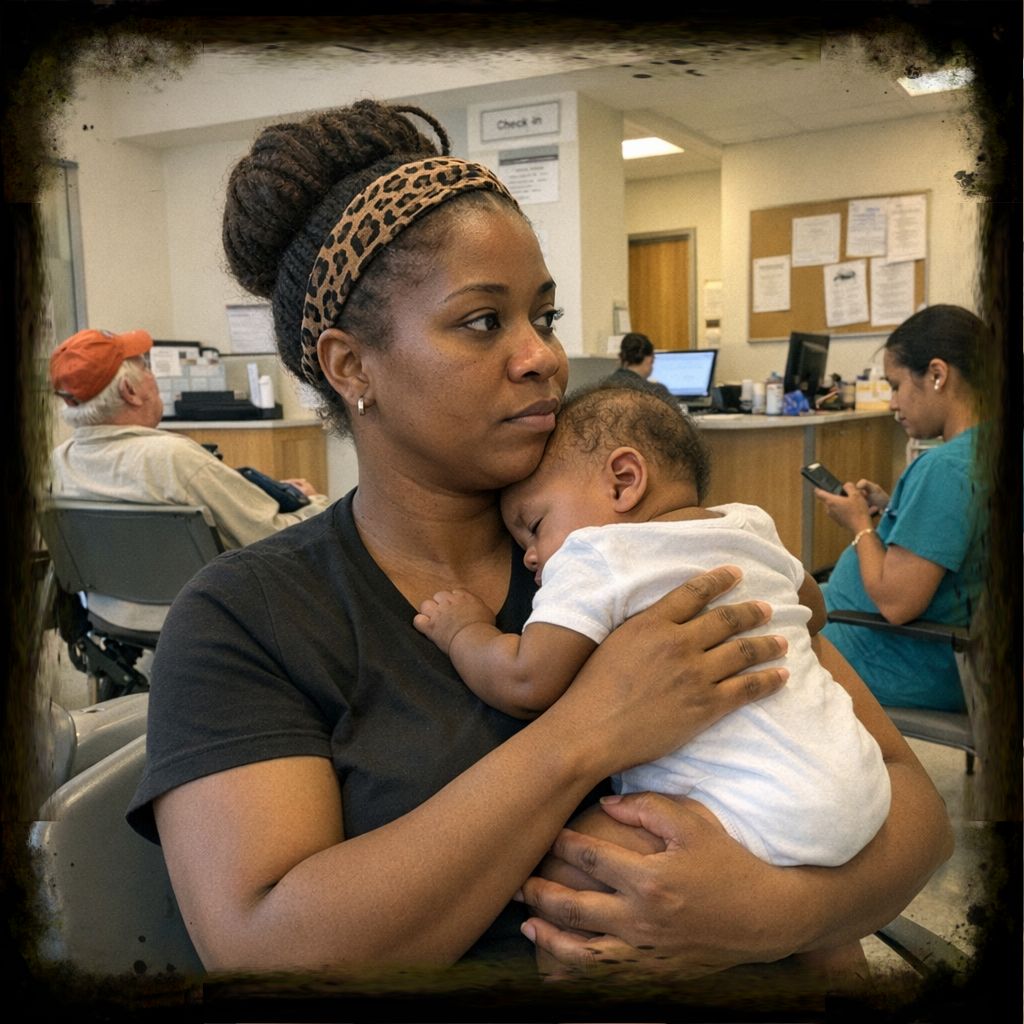
The United States spends more on healthcare per person than any other developed nation in the world — over $13,000 per American per year. And yet, by almost every meaningful measure of population health — life expectancy, maternal mortality, chronic disease rates, mental health outcomes — Americans are doing worse than people in countries that spend far less. The reason, increasingly, is not a lack of medical technology or treatment options. It is a profound and persistent inequality in who gets to access them.
Health equity — the principle that every person deserves a fair opportunity to be as healthy as possible — sounds like something everyone could agree on. In practice, achieving it requires confronting some of the most uncomfortable truths about how race, income, and geography shape life and death in America. In 2026, that conversation is no longer optional.
The numbers behind the inequality
- 14.6 years Gap in life expectancy between the richest and poorest American counties — wider than the gap between the U.S. and many developing nations
- 3x Higher rate of pregnancy-related death for Black women compared to white women in the U.S., regardless of income or education level
- 30% of rural Americans live more than 30 minutes from the nearest hospital — a number rising as rural facilities continue to close
- 100M+Americans carry medical debt — making the U.S. the only wealthy nation where healthcare costs routinely push families into financial crisis
Sources: JAMA Network Open 2024; CDC Maternal Mortality Review 2023; Rural Health Information Hub; Kaiser Family Foundation Health Debt Survey 2024
These are not abstract statistics. Each number represents real people making impossible choices — between paying rent and filling a prescription, between seeking emergency care and risking financial ruin, between living in a neighborhood with clean air and a grocery store, or one without either.
What health equity actually means — and what it doesn’t
Health equity is sometimes confused with health equality — giving everyone the same thing. But that misses the point. Equality means everyone gets the same resources. Equity means everyone gets what they actually need to reach the same outcome.
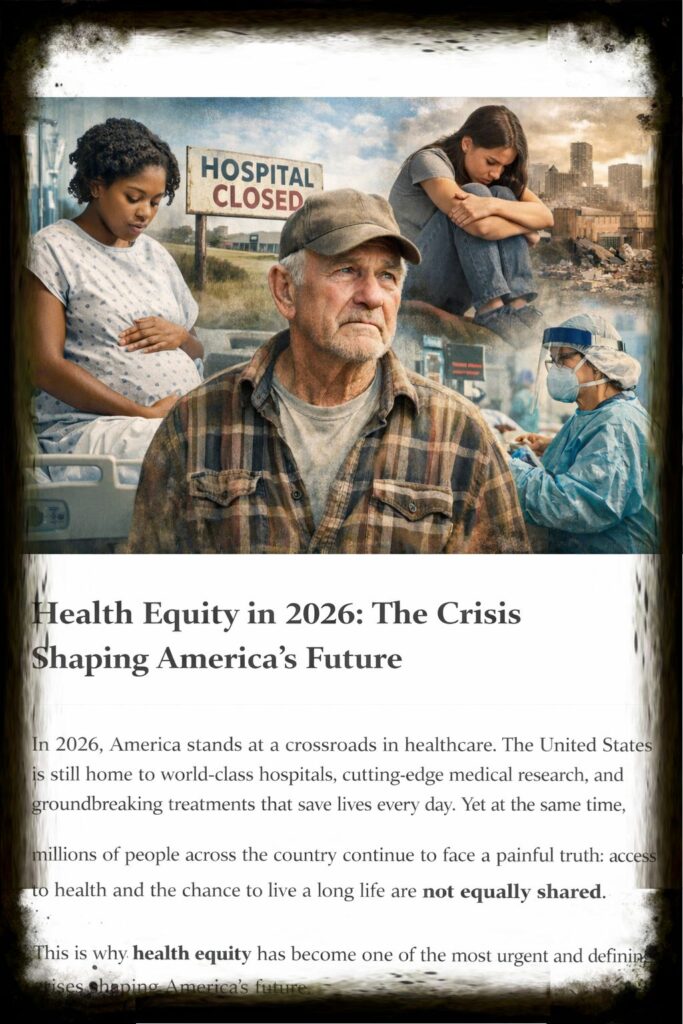
A person living in a neighborhood with no sidewalks, no fresh food, high pollution, and unsafe streets faces health barriers that someone in a wealthy suburb simply does not. Giving both people the same health insurance does not make their situations equal. Health equity requires addressing the conditions that create unequal health in the first place.
“Health equity means that everyone has a fair and just opportunity to be as healthy as possible. This requires removing obstacles to health such as poverty, discrimination, and their consequences.” — Robert Wood Johnson Foundation
The crises that reveal the problem most clearly
- Maternal mortality-Black women in the U.S. die from pregnancy-related causes at 3 times the rate of white women. Research shows this persists even when controlling for income and education — pointing directly to systemic bias in medical care.
- Rural hospital closures-Since 2010, over 140 rural hospitals have closed across the U.S. For residents of these communities, emergencies that should be survivable — heart attacks, strokes, complicated births — become potentially fatal simply due to distance.
- Mental health deserts-Over 150 million Americans live in areas officially designated as mental health professional shortage areas. Low-income communities, communities of color, and rural populations bear the greatest burden of this shortage.
- Chronic disease disparities-Black, Hispanic, and Native American communities experience significantly higher rates of diabetes, hypertension, and heart disease — conditions heavily shaped by environmental and economic factors, not just genetics.
- Medical debt crisis-Over 100 million Americans carry healthcare-related debt. Studies show medical debt disproportionately affects Black and Hispanic households, low-income families, and people in states that did not expand Medicaid.
- Climate and health-Extreme heat, poor air quality, and flooding disproportionately impact low-income neighborhoods and communities of color — who are also least likely to have the resources to adapt or recover from climate-related health events.
The deeper drivers: social determinants of health
Doctors and hospitals can treat disease. But they cannot fix the conditions that cause disease in the first place. Public health researchers have long understood that medical care accounts for only about 20% of health outcomes. The other 80% is determined by what are called the social determinants of health — the circumstances of daily life that shape how healthy or sick a person becomes long before they ever see a doctor.
- Economic stability-Income, employment, food security, and housing stability all directly shape health outcomes across a lifetime
- Education access-Higher educational attainment is consistently linked to better health literacy, healthier behaviors, and longer life
- Neighborhood environment—Air quality, access to parks, walkability, grocery stores, and neighborhood safety all shape physical and mental health
- Healthcare access—insurance coverage, proximity to providers, transportation, and ability to take time off work—all affect whether people get timely care
- Social community—Social connection, support networks, and community cohesion protect against both mental and physical health decline
- Structural racism— Decades of discriminatory housing, lending, and healthcare policies have created lasting health disadvantages in communities of color
This is why health equity advocates insist that solving the healthcare crisis requires more than building more hospitals or training more doctors. It requires addressing housing policy, food access, environmental justice, educational investment, and economic opportunity — because all of these shape health outcomes in ways that no prescription can fix.
The maternal health crisis deserves its own spotlight
Of all the health equity crises in America today, the maternal mortality crisis may be the most inexcusable. The United States has the highest maternal mortality rate of any wealthy nation — and the racial disparity within that rate is staggering. Black women are three times more likely to die from pregnancy-related causes than white women. According to the CDC, this disparity exists across income levels and education levels. A Black woman with a college degree faces higher maternal mortality risk than a white woman without one.
Research has consistently pointed to one of the primary drivers: implicit bias in medical settings. Studies show that Black patients’ pain is more frequently undertreated, their symptoms more frequently dismissed, and their concerns more frequently ignored by healthcare providers — often without any conscious intention to discriminate. The result is a system that is, in practice, less safe for Black mothers.
The maternal health crisis is not a mystery. We know what causes it, and we know that the solutions exist — more diverse medical training, implicit bias education, expanded access to midwives and doulas, better postpartum follow-up care, and community-based maternal health programs. What has been missing is the sustained investment and political will to implement them at scale.
Progress being made — and how far there is still to go
It would be dishonest to only describe the failures. Real progress has been made on health equity in recent years, and it deserves recognition alongside an honest accounting of how much further there is to go.
- Medicaid expansion — States that expanded Medicaid under the Affordable Care Act have seen measurable reductions in uninsured rates, particularly among low-income adults and communities of color. As of 2026, 40 states have expanded, though 10 still have not — leaving millions in a coverage gap.
- Community health centers — Federally Qualified Health Centers serve over 30 million patients annually, providing affordable primary care in underserved urban and rural communities. These centers are among the most cost-effective healthcare investments in the U.S. system.
- Telehealth expansion — The pandemic-era expansion of telehealth has improved access for many patients who previously faced geographic or transportation barriers. While the digital divide remains a concern, telehealth has meaningfully extended reach in some underserved areas.
- Bias training in medical education—A growing number of medical schools and hospital systems are implementing structured implicit bias and cultural competency training. Early evidence suggests these programs can meaningfully improve patient experiences for communities of color.
- State-level maternal health initiatives — Several states have expanded postpartum Medicaid coverage from 60 days to 12 months, a change that research suggests could significantly reduce maternal mortality rates among low-income women.
What real solutions require
Achieving health equity in America is not a single policy fix. It is a long-term project that requires sustained commitment across multiple sectors simultaneously. At USAConcern, we believe any serious effort has to include at minimum: universal insurance coverage with strong mental health parity, significant investment in rural healthcare infrastructure, aggressive expansion of community health centers, policies that address food deserts and environmental injustice in low-income neighborhoods, and medical education reform that takes cultural competency and implicit bias seriously.
But it also requires something harder to legislate: a genuine cultural shift in how America thinks about health. As long as health is treated primarily as a commodity — something you earn, pay for, or deserve based on your choices — rather than a basic condition of human dignity, the structural drivers of inequity will persist.
The bottom line
In 2026, the health equity crisis in America is not hidden. It shows up in maternity wards and rural emergency rooms, in therapy waitlists and pharmacy counters, in the gap between what the wealthiest Americans can access and what the rest can afford. The United States has the resources and the knowledge to build a healthcare system that works for everyone. What has historically been missing is the collective decision that everyone — regardless of race, income, or ZIP code — deserves the same chance at a healthy life. That decision is not a medical one. It is a moral one. And it is long overdue.
Sources & further reading
JAMA Network Open: “Trends in Life Expectancy by County,” 2024 — jamanetwork.com
CDC Maternal Mortality Review Committee Report, 2023 — cdc.gov/reproductivehealth
Rural Health Information Hub: Hospital Closures Data, 2024 — ruralhealthinfo.org
Kaiser Family Foundation: Health Care Debt Survey, 2024 — kff.org
HRSA: Health Professional Shortage Areas Data, 2024 — hrsa.gov
Robert Wood Johnson Foundation: What Is Health Equity? — rwjf.org
Commonwealth Fund: Mirror Mirror 2024 — U.S. Health System Performance — commonwealthfund.org
Thank you for visiting usaconcern.com and taking the time to read our content. Your visit truly matters to us. Stay alert and stay informed, because an informed voice can help shape a better future.
Feel Free to leave a comment below with your thoughts!!


Hey, I’m Vishal Srivastava — the person behind USAConcern.com. I started this site because I genuinely believe there are conversations happening in America that deserve more honest, human coverage. I write about health, mental wellness, lifestyle, and the cultural shifts shaping everyday American life, as I come from a strong background in artificial intelligence and engineering, combined with certified knowledge in mental wellness and fitness. My goal is to bridge the gap between technology and human well-being. I believe true success comes from a balance of a sharp mind, a healthy body, and smart use of technology. Through my work, I aim to provide practical solutions that improve both performance and lifestyle. Thanks for reading—your journey to a better mind, body, and life starts here.
ketocare Great information shared.. really enjoyed reading this post thank you author for sharing this post .. appreciated
Thank you for reading this and appreciating.